Digital twins have evolved from isolated simulations to data-centric platforms integral to factory automation and Industry 4.0 initiatives. From 2026 to 2030, investment decisions will determine whether digital twins remain experimental or become a standard layer across products, production systems, and supply chains.
This analysis presents areas where digital twins deliver measurable returns, examines how economics shift from pilot projects to cross-plant deployments, and outlines practical roadmaps for mid-sized and large manufacturers to manage risk while scaling.
The State of Digital Twins and Industrial Automation in 2026
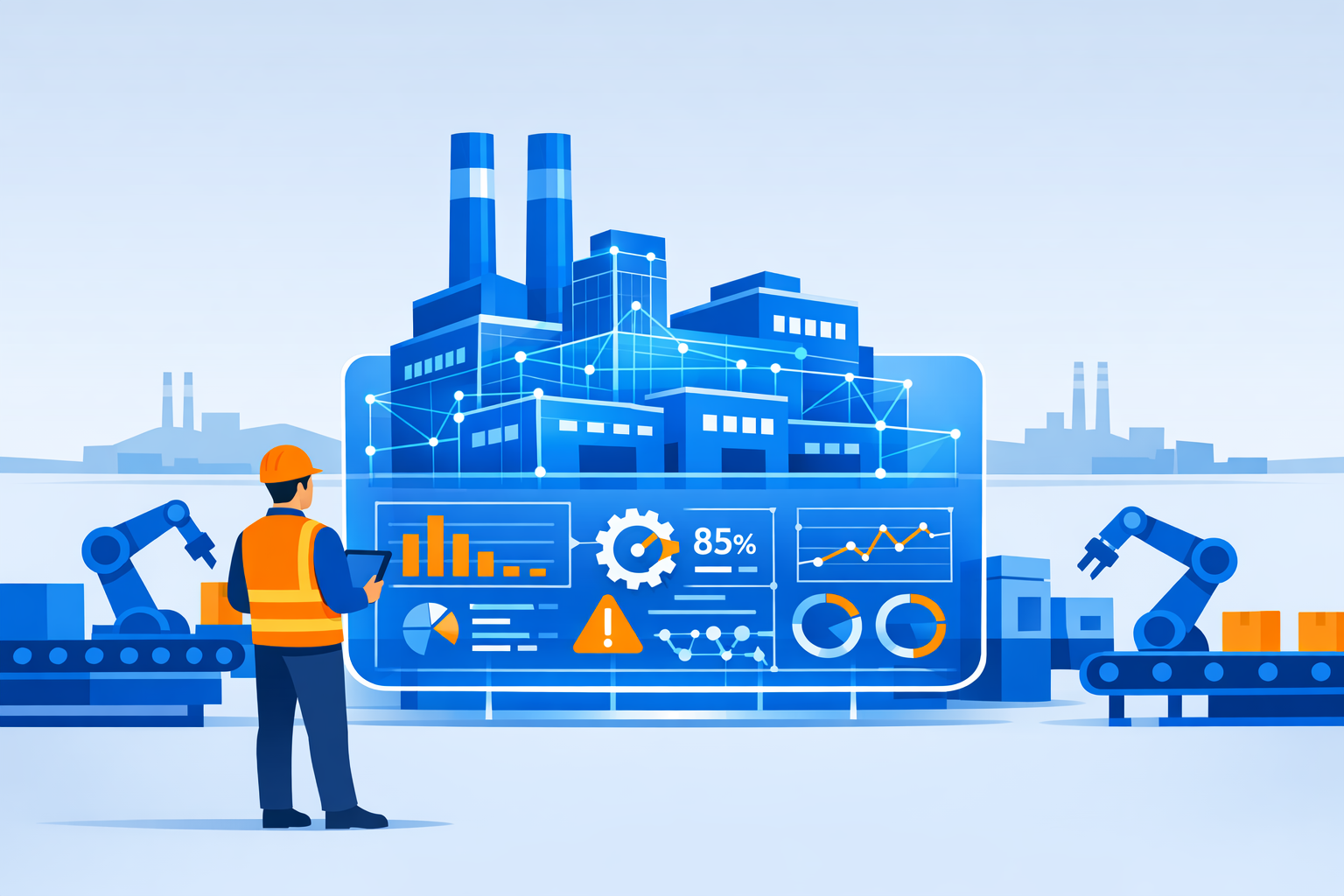
Digital twins are dynamic, virtual representations of physical assets, processes, or systems, continuously synchronized with real-world data rather than operating as static models or offline simulations.
Analyst estimates vary, but recent reports value the global digital twin market at roughly USD 33 billion in 2025, with forecasts ranging from approximately USD 49 billion by 2030 to over USD 100 billion by 2029. Many scenarios indicate strong double-digit compound annual growth.[1]
Industrial automation and Industry 4.0 spending is also expanding:
- Industrial automation revenues are projected to rise from around USD 206 billion in 2024 to nearly USD 379 billion by 2030, at an estimated 10.8% CAGR.[2]
- The broader Industry 4.0 market is estimated at roughly USD 188.5 billion in 2025, increasing to more than USD 599 billion by 2034 at a 13.7% CAGR.[3]
- Info-Tech Research Group notes that about 69% of manufacturers already use digital twin technology in some form.[4]
Despite these investments, value capture is inconsistent. A 2026 implementation guide highlights that about 64% of digital twin projects do not move beyond pilot due to integration complexity, data quality challenges, and unclear ROI.[5]
For 2026-2030, the strategic question shifts from the relevance of digital twins to how best to incorporate them into automation strategies that consistently meet capital investment standards.
Where Digital Twins Deliver Measurable Value
Engineering and Virtual Commissioning
In engineering, digital twins extend traditional CAD/CAE workflows into full virtual representations of production systems with documented benefits:[6]
- Virtual commissioning of lines and cells before on-site installation
- Offline testing of PLC (programmable logic controller) and robot logic with realistic physics and material flow
- Layout optimization, including material flow and buffer sizing, across factories
A recent white paper reports that engineering and virtual commissioning with digital twins have achieved:[6]
- Design cycle accelerations up to 50% and time-to-market reductions of up to 50% by validating concepts virtually before physical prototyping
- Productivity gains of up to roughly 25% after process optimization through simulation
Major PLM (product lifecycle management) and simulation vendors have integrated digital twin capabilities:
- Siemens' Simcenter and Tecnomatix for product, process, and factory twins
- Dassault Systèmes' 3DEXPERIENCE for "virtual twin experiences" covering product and manufacturing
- PTC ThingWorx and similar industrial IoT (IIoT) platforms for operational twins with live sensor feeds
- Ansys Twin Builder for high-fidelity asset simulations
Engineering twins commonly serve as an initial step in digital twin strategies, supporting new product introduction (NPI) and capital projects.
Operations, Maintenance, and Reliability
On shop floors, digital twins integrate IIoT data and analytics for predictive maintenance, process control, and energy optimization.
Unplanned downtime can cost manufacturers up to USD 50 billion annually.[4] Reducing some of this burden can justify significant investment in automation and analytics.
Case studies and white papers report quantifiable outcomes:[6]
- Predictive maintenance with digital twins yields up to 30% maintenance cost reductions, 70-75% fewer equipment breakdowns, and 20-25% reductions in maintenance planning time
- Factory programs in McKinsey's "lighthouse" sample and related research cite 20-30% improvements in overall equipment effectiveness (OEE) when digital twins are paired with advanced analytics.[8]
- Surveys of industrial settings note 25-30% reductions in maintenance expenses and multi-million-dollar annual savings at individual plants.[9]
Closed-loop integration-where sensor data feeds the twin, analytics predict issues, and controls or maintenance workflows adjust proactively-is a defining feature for maintenance leaders.
Factory Networks and Supply Chains
Digital twins are expanding to cover logistics, inventory, and multi-plant networks.
- The global supply chain digital twin segment is estimated at about USD 3.4 billion in 2024, with expectations of reaching around USD 6.4 billion by 2030 (CAGR ~11.2%).[10]
- Use cases include demand shock simulations, capacity reallocation, network-wide energy optimization, and transportation adjustments.[6]
For organizations deploying APS (advanced planning and scheduling), MES (manufacturing execution systems), and WMS (warehouse management systems), supply chain twins typically follow once data models and governance mature.
Investment Archetypes and Economics, 2026-2030
Digital twin economics differ significantly between pilot-level assets and enterprise-scale platforms. Recent benchmarks provide practical investment and timeline guidelines.[11]
Representative Digital Twin Investment Profiles
Note: Figures below reflect published benchmarks and case studies; they are indicative, not prescriptive.
| Investment archetype | Typical scope | Indicative initial investment (USD) | Time to first measurable impact | Commonly reported outcomes |
|---|---|---|---|---|
| Asset-level maintenance twin | One critical machine or set of assets (compressors, CNCs) | ~75,000-150,000 for a single-asset twin with sensors and integration | 6-12 months | ~25-35% downtime reduction; ~30% maintenance efficiency; better asset health visibility.[11] |
| Line / cell-level twin | A production line or automated cell | ~200,000-400,000 for line-level twin of multiple assets | 12-18 months | 20-30% OEE improvement; higher throughput; improved changeover planning.[11] |
| Focused plant-level twin | Critical lines/utilities within a single facility | ~200,000-500,000 for key lines; 12-18 month payback reported | 12-24 months | 5-8% manufacturing cost reduction; improved energy and layout optimization.[12] |
| Full factory twin | End-to-end plant model for greenfield/retrofit | ~500,000-2 million for full plant twins in greenfield scenarios | 6-18 months initial; benefits ongoing | 5-8% cost reduction; faster ramp-up; improved capex through scenario simulation.[13] |
Recurring costs, including cloud hosting, platform subscriptions, support, and data governance staffing, typically add 15-25% of initial capital expenditures (capex) per year, depending on architecture and sourcing.[14]
ROI Drivers Relevant to CFOs
Common ROI drivers observed in published frameworks and case studies:[15]
- Avoided downtime: Value based on cost per minute/hour reduced
- Yield and quality: Reduced scrap, rework, and warranty claims
- Labor and maintenance efficiency: Fewer emergency call-outs, better planning, more productive technician time
- Energy and resource savings: Lower energy usage, optimized utilities and raw materials
- Time-to-market and ramp-up: Faster commissioning and changeovers, supporting revenue growth
Selected examples:
- Siemens reported cumulative cost reductions of approximately EUR 500 million over three years from digital twin initiatives, representing multi-fold internal ROI in published studies.[15]
- Analyst commentary notes manufacturers implementing combined IoT-digital twin solutions see about 30% higher ROI compared to those using one technology alone.[15]
Payback targets for large plant-level twins commonly range from 18 to 36 months, while asset-focused projects often aim to recover capital in 6 to 18 months.
Technology and Architecture: Building for Scale
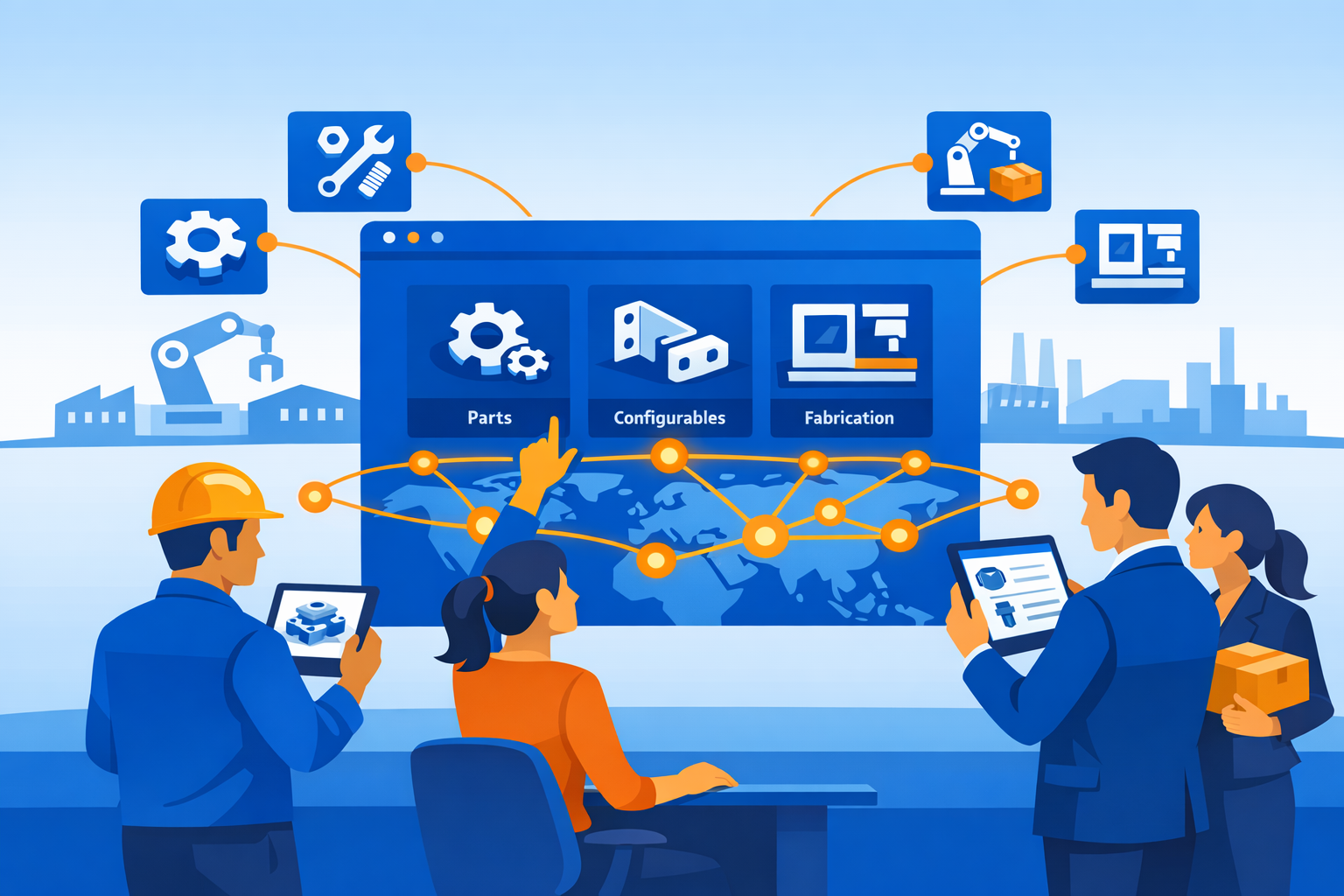
Interoperability and the Digital Thread
Scaling digital twins requires consistent data models and interoperable systems.
- OPC UA (OPC Unified Architecture, IEC 62541) standardizes secure data exchange from sensors and controllers to broader systems and the cloud. OPC UA, formalized as IEC 62541, offers a platform-independent service-oriented architecture.[16]
- Digital thread and federated digital thread concepts link engineering, manufacturing, and service data without requiring centralized databases.[17]
These approaches allow organizations to layer twins over existing MES, SCADA, PLM, and ERP systems, reducing the need for wholesale system replacement.
Asset Administration Shell and the Industrial Digital Twin Association
Within European Industry 4.0, the Asset Administration Shell (AAS) is a cornerstone for digital twin representation.
- The AAS, from Plattform Industrie 4.0 and formalized in IEC 63278-1, provides a standardized structure for industrial asset representation, enabling vendor-agnostic interoperability.[18]
- The Industrial Digital Twin Association (IDTA) maintains AAS specifications and promotes them as a standard across vendors.[19]
Aligning with AAS and open standards can reduce integration and vendor lock-in risks for multi-vendor deployments through 2030.
Platforms, Ecosystem, and Composability
Ecosystems are converging on reference architectures and modular components:
- The Digital Twin Consortium provides a testbed program and composability framework, standardizing digital twin architectures and evaluating technologies such as generative AI and multi-agent systems.[20]
- Leading industrial and cloud suppliers, including Siemens, Dassault Systèmes, PTC, and NVIDIA, are integrating physics-based twins, real-time data, and AI-based optimization into unified platforms.[7]
Architectures should be modular, with distinct boundaries between:
- Data acquisition and normalization (field gateways, OPC UA servers, time-series databases)
- Core twin models (geometry, logic, KPIs)
- Analytics and AI (predictive models, simulations, optimizations)
- Execution system integration (MES, CMMS/EAM, SCADA/DCS)
Roadmaps for 2026-2030 by Organization Size
Small and Mid-Market Manufacturers
Digital twin adoption for small and mid-sized manufacturers is more accessible due to SaaS and "twin-as-a-service" models.
Recent implementations show:[11]
- Asset- or cell-level twins can start at USD 50,000-200,000 with targeted objectives
- Subscription models position platform costs as operating expense (Opex) with outcome-based pricing
- Typical payback is 12-18 months for focused use cases such as predictive maintenance
A staged roadmap may include:
Baseline and data readiness (2026)
- Quantify downtime, scrap, and energy costs for key lines
- Audit sensor and data infrastructure
Pilot a targeted twin (2026-2027)
- Focus on a high-impact challenge (e.g., chronic downtime) with clear KPIs
Integrate with workflows (2027-2028)
- Link to CMMS/EAM and MES
- Embed alerts and recommendations into standard procedures
Scale by replication (2028-2030)
- Expand to additional lines and sites, reusing models and dashboards
- Broaden focus to quality and energy optimization after establishing data reliability
Large Enterprises and Multi-Plant Networks
Large manufacturers, including global OEMs and tier-one suppliers, are coordinating digital twin initiatives across engineering, operations, and supply chain functions.
Observed approaches:[15]
- Enterprise digital thread programs connect design, process, and plant twins via PLM, MES, and ERP
- Hybrid governance spans operations, engineering, and IT for roadmap and standards ownership
- Multi-plant modeling supports capacity and sourcing allocation and resilience planning
A 2026-2030 path often includes:
- Consolidate pilots and define reference architecture (2026-2027)
- Deploy platforms to priority plants (2027-2028)
- Expand to supply chain and partners (2028-2029)
- Institutionalize continuous improvement (2029-2030)
Funding Models, Risk Management, and Governance
Funding and Commercial Models
Digital twins are funded through a mix of capex and Opex:
- Per-site/asset subscriptions for cloud platforms, with potential volume discounts[21]
- Fixed-price or time-and-materials implementation (assessment, modeling, integration)[14]
- Twin-as-a-service offerings, bundling scanning, modeling, and hosting, are increasingly common[22]
TCO (total cost of ownership) assessments over 5-10 years should consider sensors, connectivity, subscriptions, cybersecurity, compliance, and internal capability-building costs[14].
Key Risks and Mitigation
Interviews and surveys highlight common risks[5]:
- Integration complexity and data quality
- Legacy PLCs and disparate data impede progress
- Mitigation: phased data readiness, standard protocols (e.g., OPC UA), AAS models
- Unclear governance
- Without ownership, twins can stagnate
- Mitigation: assign lifecycle owners and clear RACI (responsible, accountable, consulted, informed) structures
- Scope creep
- Overly ambitious first projects delay value
- Mitigation: narrow, high-value use cases and composable architectures
- Underfunded operations
- Projects funded only for launch often see accuracy degrade within 12-18 months, eroding results.[23]
- Mitigation: budget for maintenance, data stewardship, and algorithm retraining
- Cybersecurity exposure
- Expanded attack surfaces raise risk, with double-digit growth in cybersecurity spending forecast[24]
- Mitigation: extend OT security practices to cover twin platforms
Actionable Conclusions and Next Steps for 2026
For machinery and manufacturing leaders considering 2026-2030 investment:
- Tie digital twins to concrete financial results. Focus on measurable targets such as downtime, OEE, energy per unit, or ramp-up time, and quantify the baseline first.
- Start with scalable, focused deployments. Pilot asset- or line-level twins using modular and open architectures (OPC UA, AAS) to avoid isolated solutions.
- Integrate with automation and maintenance systems. Plan from the outset for connections to MES, CMMS/EAM, and SCADA/DCS systems.
- Treat twins as persistent products. Assign product ownership and budget for ongoing data quality, model updates, and cybersecurity.
- Align with long-term automation and Industry 4.0 goals. Position digital twins as the orchestration layer connecting automation, robotics, material handling, and process control.
By 2030, organizations using such approaches are likely to treat digital twins as core elements in automation, engineering, and supply chain management.
Frequently Asked Questions
What is the difference between a digital twin and a traditional simulation?
Conventional simulations run offline with assumed, static input data. They address discrete scenarios and are not connected to operational systems.
A digital twin maintains continuous, bi-directional synchronization with its physical counterpart. Definitions highlight regular or live data updates between digital and physical systems; without this, a model remains a simulation and not a true digital twin.[25]
Digital twins in manufacturing combine geometry, logic, sensor data, and analytics for real-time monitoring and optimization.
How should manufacturers prioritize digital twin use cases?
Effective prioritization involves focusing on:[6]
- High financial impact (e.g., significant downtime or scrap)
- Operational containment (clear boundaries and ownership)
- Data readiness (existing or feasible instrumentation, historical data)
Common initial applications are predictive maintenance, virtual commissioning, or energy optimization.
How do digital twins integrate with automation and MES systems?
Integrations are typically layered:
- Field/control layer: PLCs, DCS, robots, and sensors expose data via OPC UA or similar protocols[16]
- Context/data layer: Historians normalize and contextualize data, often through AAS models[18]
- Twin/analytics layer: Digital twin platforms ingest and process data for simulations, predictions, and optimization
- Execution layer: MES, CMMS/EAM, and quality systems consume outputs to trigger actions
Robust APIs and data models are critical.
What organizational capabilities are needed to manage digital twins?
Mature deployments require:[26]
- Manufacturing/process engineers to define and validate models
- Control/automation engineers to integrate controls and sensors
- Data engineers/architects for pipelines and storage
- Data scientists and reliability engineers for analytics
- Product owners or platform managers for governance and ROI
Training programs increasingly address cross-functional skills and standards.
How do organizations avoid vendor lock-in and stranded investments?
Recommended practices include:
- Favoring open architectures (OPC UA, AAS) and documented APIs[16]
- Separating data and semantics from application logic
- Specifying exit criteria and data portability in contracts
- Using reference models from industry consortia rather than relying on single-vendor frameworks[20]
Incremental, standards-based scaling preserves future flexibility as technology matures.