Executive summary. Industrial robotics is entering a new phase where artificial intelligence (AI), collaborative robots (cobots), and digital twins are as influential as mechanical performance. By the end of 2024, factories globally operated approximately 4.66 million industrial robots, an increase from just over 3 million in 2020, while global robot density more than doubled over seven years.[1] Amid structural labor shortages, demand volatility, and supply chain risks, AI-enabled automation is advancing from isolated pilots to enterprise-scale implementations. Investment and policy trends indicate sustained growth at least through 2033.
1. Industrial Robotics Market: Entering an AI-Accelerated Decade
Recent World Robotics and market data indicate that industrial robotics, though mature, remains a high-growth pillar of manufacturing automation.
Global industrial robot installations reached about 542,000 units in 2024, maintaining annual demand above half a million for the third consecutive year.[1] In parallel, the global average robot density in manufacturing stood at around 162 robots per 10,000 employees in 2023, more than doubling since 2016.[2]
On the market side, projections show the industrial robotics sector rising from roughly USD 38 billion in 2025 to almost USD 97 billion by 2035, a compound annual growth rate (CAGR) close to 10%.[3] Growth is increasingly driven by AI-enabled software, connectivity, and services integrated with robot hardware.
Key structural drivers:
- Heightened wage pressures and demographic shifts in manufacturing regions.[4]
- Reshoring and regionalization supporting high-automation models.[5]
- Transition from programmable, "blind" robotics to AI-driven perception and optimization.
- Government strategies and subsidies, especially in China, Europe, and certain US states.[6]
AI in manufacturing and robotics
AI is becoming a key differentiator in robotics. A recent forecast places AI in manufacturing market revenue near USD 350 billion by 2033, rising from just a few billion today.[7] Relevant applications linked to robotics include:
- Predictive maintenance and machine inspection.
- Vision-based quality control and defect identification.
- Intelligent material handling and intralogistics.
- Adaptive process control for welding, machining, and additive manufacturing.[8]
For robotics suppliers and system integrators, competitive advantage now hinges on AI models, data pipelines, and digital twins in addition to robust motion control and reliability.
2. Regional and Sectoral Adoption Patterns Through 2033
2.1 Regional deployment
International Federation of Robotics (IFR) data reveal a regional concentration of deployment:
- By 2023, 70% of new industrial robots were installed in Asia, 17% in Europe, and 10% in the Americas; Asia's share rose to approximately 74% in 2024.[9]
- China accounts for over half of annual global installations in some recent years and leads in both production and purchasing.[10]
- Europe maintains high robot density in core sectors, but installations have declined in some large economies since 2023, paralleling downturns in automotive and metals.[11]
Manufacturers should consider these patterns for planning: Asia's prominence is reflected in supplier and talent concentration. Europe emphasizes engineering excellence and safety, while North America focuses on large-scale automation projects and cobot ecosystems.[5]
2.2 Sector hotspots
Robot adoption remains concentrated in select industries:
- Automotive represents about 30% of installed robots, followed by electrical/electronics at 25%; metals, machinery, plastics, and food each account for single to low-teen shares.[12]
- Cobots are gaining most rapidly in automotive, metalworking, logistics, and electronics, where variation and human-robot collaboration are common.[13]
- Logistics and warehousing, often flagged as "professional service robots," are becoming tightly linked with factory automation via shared AI and digital twin platforms.[1]
These dynamics suggest strong ongoing demand through 2033 for AI-enabled robots in sectors combining high volume, variability, and quality requirements-automotive, EV and battery manufacturing, semiconductors, electronics, and large-scale logistics.
3. From Conventional Cells to Cobots and AI-Native Workcells
3.1 Conventional industrial robots: High-throughput backbone
Six-axis and SCARA robots form the core of high-volume manufacturing, dominating tasks such as welding, pick-and-place, press tending, and machine loading. Their strengths include:
- Repeatable workpieces and programmed paths.
- Safety measures like cages, light curtains, and interlocks.
- Predominantly offline or teach pendant programming.
These systems deliver well-established economics, particularly in multi-shift environments.
3.2 Collaborative robots: Flexible capacity for labor-constrained plants
Cobots incorporate force and speed limits, enhanced sensing, and safety controls to permit shared human-robot workspaces under standards such as ISO 10218 and ISO/TS 15066.[14]
Key market indicators:
- The global cobot market is projected to grow from USD 2.5 billion in 2024 to over USD 15 billion by 2033, suggesting annual growth above 20%.[13]
- Automotive and metalworking lead current cobot deployments, together accounting for over 40%, with increased adoption in electronics, food, beverage, and logistics.[13]
Cobots help address labor shortages. In the EU, manufacturing job vacancy rates rose from 6.5% pre-pandemic to 10.7% in 2023, the largest increase among major sectors, intensifying the need for automating repetitive or hazardous tasks.[4]
3.3 AI-enabled robotic systems: Perception, decision, and learning
The next phase couples robots with AI for enhanced perception and decision capability:
- Computer vision enables variable part handling, inline metrology, and 100% visual inspection.[8]
- Machine learning-powered path planning optimizes cycle times and adapts to disturbances in real time.
- Predictive maintenance models analyze data from sensors to estimate component lifespan of joints and gearboxes.[15]
With AI, robots become edge devices integrated with manufacturing execution systems (MES), quality platforms, and digital twins, raising overall equipment effectiveness (OEE).
3.4 Comparing deployment models
A simplified table compares deployment and economic factors among three robotics archetypes.
| Dimension | Conventional industrial robots | Collaborative robots | AI-enhanced robotic systems |
|---|---|---|---|
| Typical deployment | Caged cells, fixed tooling, high-volume production | Shared workspaces, semi-flexible assembly/handling | Connected workcells with sensors, vision, digital twins |
| Main value drivers | Throughput, repeatability, labor substitution | Flexibility, hybrid workflows, space efficiency | Quality, predictive maintenance, real-time optimization |
| Integration complexity | High mechanical and safety design, basic logic | Enhanced safety/risk validation for interaction | High: data infrastructure, model management, cloud/edge integration |
| ROI focus | Labor, cycle time in multi-shift ops | Labor reallocation, changeover, ergonomics | OEE, scrap reduction, downtime, ramp-up speed |
| Workforce impact | Staff reassigned to higher-value work; programming needs | Operators upskilled as robot tenders; safety focus | Need for data, AI, and modeling specialists |
4. Digital Twins: Planning, Commissioning, and Predictive Maintenance
Digital twins-virtual replicas synchronized with physical assets-are moving from R&D to standard factory automation practice.
The manufacturing digital twin market is valued at about USD 4.1 billion in 2024 and is projected to grow at a 35% CAGR through 2030, making it a rapidly expanding segment of industrial software.[16]
4.1 Use cases across the robotics lifecycle
- Virtual commissioning
- Simulate robot paths and collision risks before hardware setup.
- Debug logic and safety software in virtual environments.
- Cut ramp-up times and avoid post-installation rework.[17]
- Predictive maintenance and anomaly detection
- Digital twins process telemetry to identify deviations.
- Studies show improved scheduling and detection in robots and rotating equipment.[18]
- Throughput and scheduling optimization
- Systems-wide twins evaluate shift patterns, batch sizes, and layouts.
- Large industrial parks report twin use in over 70% of facilities for energy/logistics gains.[19]
Robot twins are frequently developed in specialized tools, then linked to broader plant twins and MES.
4.2 Evidence of impact
Evidence is becoming more quantifiable. One deployment reduced production downtime by about 25% using digital twins for predictive maintenance and virtual commissioning.[20] Other studies in process and discrete manufacturing report considerable gains in failure prediction and maintenance efficiency when combining twins with machine learning and high-performance computing.[21]
Adoption is trending toward embedding digital twin layers into large automation initiatives from the outset, rather than adding simulation afterward.
5. ROI, Payback, and Total Cost of Ownership for AI-Driven Automation
Manufacturing investment is guided by strict ROI standards. Several findings stand out:
- Literature often adopts three years as the maximum acceptable payback for robotics.[22]
- Medium plants in Europe report payback periods of about 18-30 months for initial multi-robot cells, with savings largely due to labor shifts, less scrap, and better utilization.[23]
- Comprehensive digital factory projects average 2.9-year payback, typically delivering 15-25 percentage point OEE improvements and double-digit unit cost reductions.[24]
Key variables for success:
- Utilization: Robot ROI depends heavily on operational hours; reduced uptime sharply increases payback periods.[25]
- Labor costs and ergonomics: Higher wage settings and manual, repetitive work justify automation.
- Complexity and product mix: AI-enabled robots offer edge in adaptable settings. In stable, long-run processes, conventional robots suffice.
- Digital maturity: Plants with standard data infrastructure and integrated systems capitalize on AI and digital twin investments faster.[26]
Evaluations should consider total cost of ownership (TCO) over 7-10 years, covering integration, training, cybersecurity, and software lifecycle costs, alongside benefits in quality, uptime, and flexibility.
6. Cybersecurity, Safety, and Interoperability in Networked Robotics
Networked, cloud-connected, and AI-enabled robots increase operational cybersecurity risk.
- IEC 62443 outlines security standards for automation and control, including robot controllers and PLCs.[27]
- Functional safety is set by ISO 10218 for industrial robots and ISO/TS 15066 for cobots, with guidance highlighting cybersecurity's influence on safety.[14]
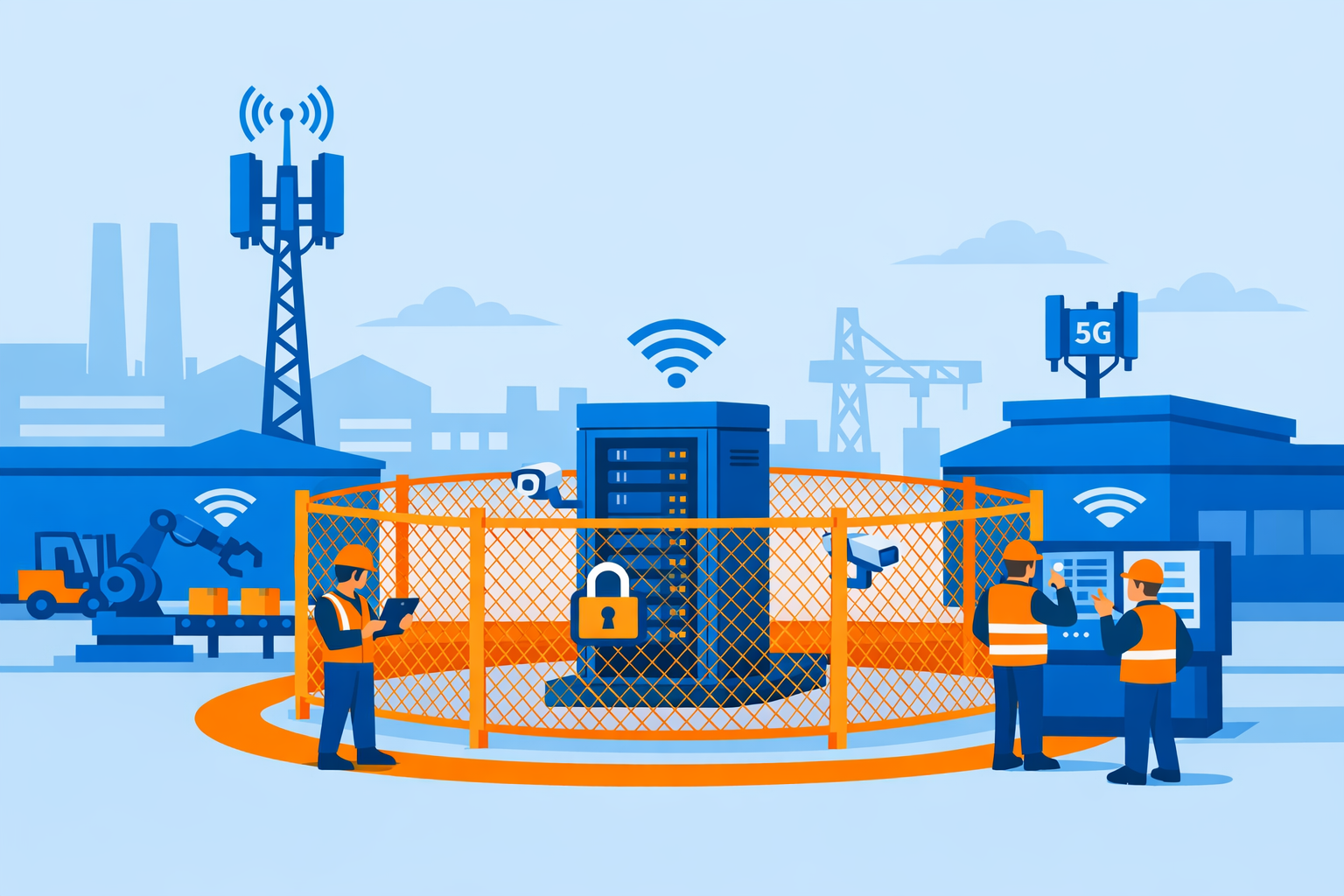
- Industry guidance stresses segmentation, access control, and "defense in depth" around robot cells to limit risks from malicious or accidental interference.[28]
On interoperability:
- OPC UA enables cross-platform, secure data exchange from sensors to cloud.[29]
- The OPC UA Robotics companion specification lets controllers from different vendors present consistent kinematics and skills, easing integration with MES, digital twins, and AI orchestration.[26]
By 2033, compliance with these security, safety, and interoperability standards will be expected in regulated and mission-critical sectors.
7. Workforce, Skills, and Organizational Change
The outlook for industrial robotics is closely tied to workforce planning.
7.1 From displacement fears to task reconfiguration
World Economic Forum and consulting surveys report:
- WEF's 2023 report projects automation of around 42% of business tasks by 2027, with most roles transformed rather than eliminated.[30]
- Over 60% of firms in a global survey expected to create new robotics-related positions, especially in engineering and maintenance.[31]
Sector analyses in Germany and other manufacturing centers suggest that robotics shifts the task mix, raising needs for monitoring, troubleshooting, and data skills while reducing repetitive work.[32]
7.2 Upskilling requirements
Reports highlight ongoing retraining needs:
- 60% of robot technicians require significant retraining every two years to keep current with new systems and standards.[33]
- Manufacturers largely retrain current staff as robot tenders or cobot cell leaders, rather than relying solely on external recruitment.[33]
This points to the necessity of structured training, updated role definitions, and close links to technical educators for effective workforce strategies.
8. Roadmap: From Pilot to Scaled AI Robotics by 2033
Evidence from early industrial adopters informs several steps for scaling AI-enabled robotics over the next decade.
8.1 Establish an automation and data baseline
- Audit robot fleets, OEE, downtime, and quality issues by line.
- Assess digital readiness, connectivity, and MES/SCADA presence.
- Benchmark robot density against peers to spotlight automation gaps.[2]
8.2 Prioritize high-value, AI-ready use cases
Immediate focus areas:
- Vision-based inspection for complex or safety-critical products.
- Predictive maintenance targeting robot cells with chronic downtime.
- Human-robot collaborative tasks addressing ergonomic or variable assembly challenges.
- Automated material handling with stationary and mobile robots.
These applications already show measurable impact.[8]
8.3 Build a scalable architecture: OPC UA, digital twins, and AI platforms
- Standardize data protocols using OPC UA to avoid custom integrations.[29]
- Develop a digital twin approach for key robot cells with clear maintenance of model accuracy and data links.
- Define an AI model lifecycle to support multiple use cases and enable reuse across lines.
8.4 Embed governance, cybersecurity, and safety from the outset
- Design robot systems to ISO 10218/ISO TS 15066, including thorough risk assessments.[14]
- Apply IEC 62443 zoning and security levels for robust defense and secure access.[27]
- Establish procedures for AI governance and safety-related model rollback on anomaly detection.
8.5 Invest in skills, change management, and partnerships
- Create training programs for operators, technicians, and engineers in robotics, AI, and data.
- Use digital twins and simulation environments for hands-on upskilling.[34]
- Form partnerships with OEMs, integrators, and vendors aligned with advancing AI and standards through 2033.
Conclusions and Next Steps
Industrial robotics is on track for sustained expansion to 2033, with change driven by AI, cobots, and digital twins. Automation is evolving from static, caged cells to adaptive, interconnected production systems.
A decade ago, investment debates focused on single robotic cells. In the coming years, critical questions will concern:
- Fleet management using interoperability standards.
- Enterprise-scale operationalization of AI for perception, optimization, and predictive maintenance.
- Securing networked systems without sacrificing safety or uptime.
- Redesigning work, training, and governance so that people and machines enhance one another.
Capturing the benefits of AI-driven robotics will require moving beyond pilot projects. The most effective path remains a structured roadmap encompassing ROI analysis, architecture standardization, digital twins, and workforce development-essential to achieving the productivity, quality, and resilience advantages projected through 2033.
Frequently Asked Questions
What growth rate is expected for the industrial robotics market through the 2030s?
Forecasts indicate high single-digit yearly growth for industrial robotics hardware to 2035, which could nearly 2.5× market value between 2025 and 2035.[3] Including software, AI, and services linked to robots, forecast growth is even stronger, supported by market projections for both AI in manufacturing and digital twins.[7]
Where are AI-enabled robots delivering the clearest ROI today?
The most robust ROI cases for AI-powered robotics are in predictive maintenance of robot cells and critical machines, vision-based quality checks for complex parts, and adaptive material handling in automotive and electronics.[8] Studies show double-digit reductions in scrap and unplanned downtime, with payback often within two to three years given strong project governance.[23]
How do collaborative robots change deployment and safety requirements?
Cobots enable direct human-robot collaboration through force and speed limits, advanced sensors, and specific designs. Deployments must meet general industrial robot safety (ISO 10218) and collaborative-specific standards (ISO/TS 15066) concerning risk assessment, permissible contact, and safe modes.[14] This shift directs more engineering toward task analysis and collaborative validation.
What role do digital twins play in planning future robotics investments?
Digital twins enable validation of robot cell designs and simulation of scenarios ahead of deployment.[17] In operation, twins support predictive maintenance by comparing expected and real-time data, reducing downtime and boosting maintenance efficiency in documented cases.[18] As capital programs demand higher utilization and faster ramp-up by 2033, digital twins are becoming integral to major robotics investments.
Which cybersecurity standards are most relevant for networked robot cells?
The IEC 62443 standards family covers cybersecurity for industrial automation, providing requirements for robot controllers and PCs.[27] These should be paired with ISO safety standards and vendor guidelines, following industry best practices such as network segmentation, secure access, and layered defenses to protect robot operations.[28]