The latest funding surge in AI-native factory automation, led by former OpenAI chief research officer Bob McGrew's startup Arda, reflects increased capital movement from digital AI toward the physical economy of machines and production lines. This analysis explores the implications of a $70 million round for an AI factory platform on industrial productivity, workforce changes, and emerging governance requirements in smart factories.
1. A New Wave of Capital into Industrial and "Physical AI"
OpenAI's former chief research officer Bob McGrew is reportedly raising about $70 million for Arda, a manufacturing-focused AI startup valued around $700 million, to build a software and video-model platform that trains robots on factory footage and coordinates machines and humans across the production process. This move is part of a broader investment trend into "physical AI"-AI designed to perceive, plan, and act in real-world environments, beyond software applications.
1.1 Capital flows into AI-native factory and robotics platforms
Recent deals highlight the scale and focus of capital flows:
- The AI in industrial automation market is projected to reach $72.5 billion by 2033, growing at a 21.9% CAGR between 2026 and 2033.
- Figure AI, a humanoid robotics startup in industrial and logistics sectors, raised $675 million in February 2024 at a $2.6 billion valuation, with backing from OpenAI-linked funds, Microsoft, and Nvidia.
- Skild AI, building a foundation model for robots, has secured over $2 billion, including a $1.4 billion Series C in January 2026 at a valuation above $14 billion.
- Physical Intelligence, a US robotics software provider, raised $400 million in 2024 and $600 million in 2025 at a $5.6 billion valuation for software that controls diverse robot types.
In Europe, public funding amplifies private investment:
- The European Commission reports more than 90,000 industrial robots were installed in Europe in 2023, with over 400 service-robotics producers active in the region.
- EU initiatives like the Apply AI Strategy and Horizon Europe are funding "Robust and trustworthy Generative AI for Robotics and industrial automation" to develop foundation models for industrial robots and automation systems.
1.2 How Arda fits into the industrial automation landscape
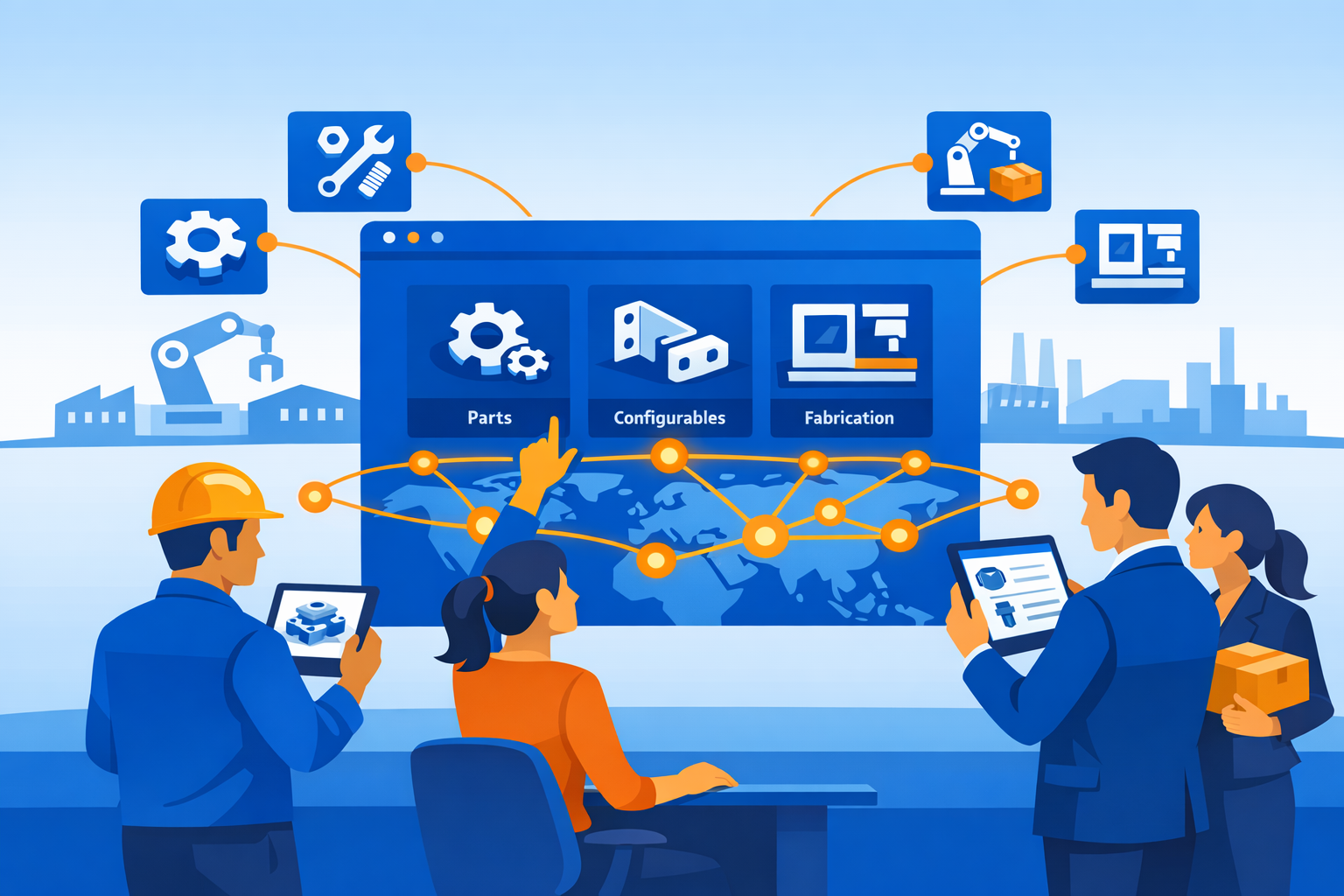
Arda's reported approach-a video-based AI system trained on factory footage to generate robot behaviors and orchestrate workflows-illustrates key shifts in factory automation:
- Software-first autonomy stacks: Platforms such as Arda, Physical Intelligence, and Skild AI focus on software that controls mixed fleets of industrial robots, collaborative robots (cobots), and autonomous mobile robots.
- Data-centric automation: Factory video, machine logs, and quality data enable ongoing retraining of perception and control models.
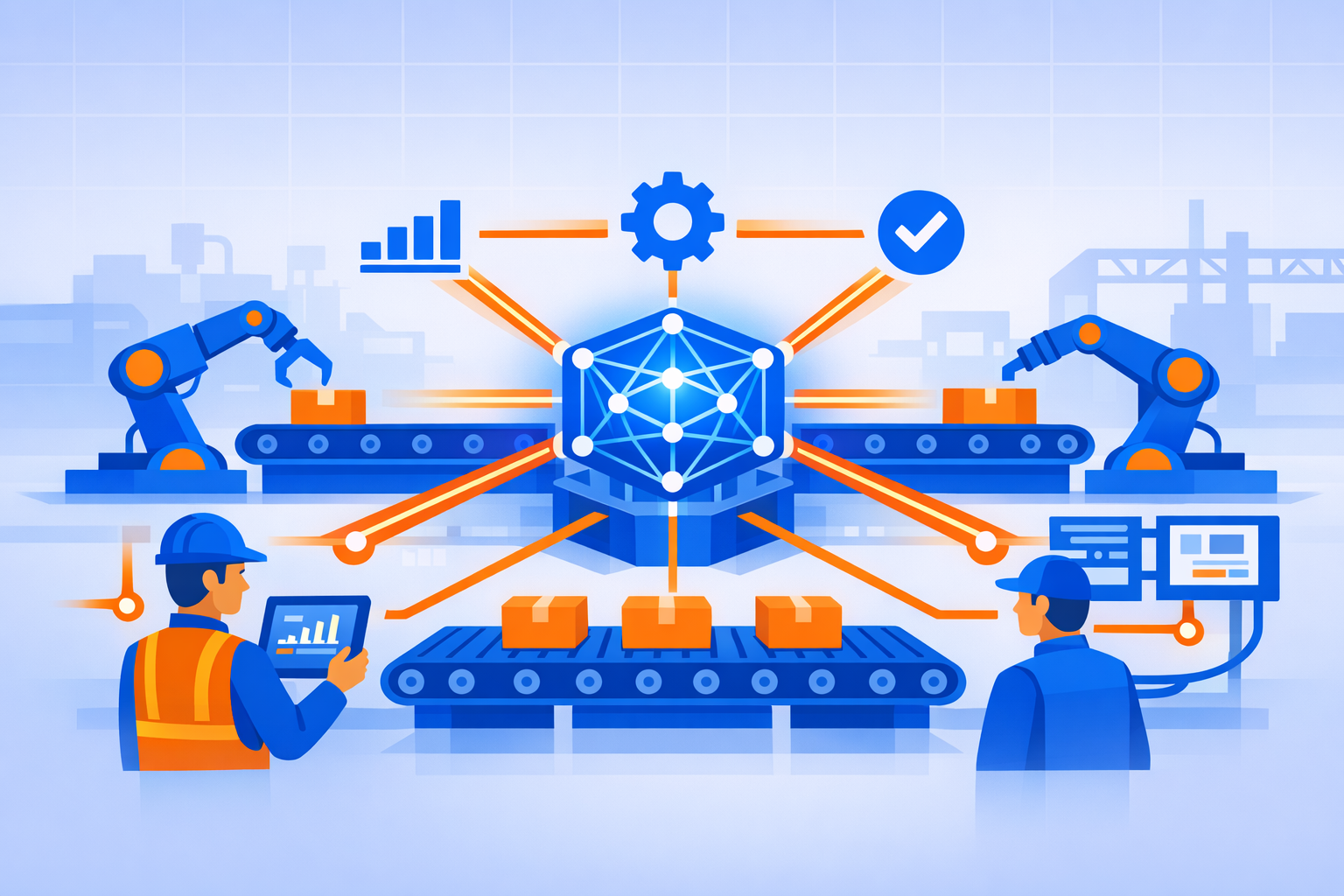
- Coordination layer for humans and machines: These platforms manage task sequencing for workers, robots, and machines from design through assembly, moving beyond isolated solutions.
For mid- to large manufacturers, industrial automation increasingly mirrors cloud-native software: an AI "coordination OS" overlays programmable logic controllers (PLCs), computer numerical controls (CNCs), and MES/ERP software, managing resources in real time.
2. Where AI-Driven Factory Automation Actually Delivers Productivity
Investment targets productivity gains, but outcomes depend on well-selected use cases and seamless integration with existing manufacturing software.
2.1 High-impact use cases emerging on the shop floor
Market research and case studies identify AI applications already creating measurable results:
Predictive maintenance and asset health
- A benchmark covering 10,000 CNC machines (3.3% failure rate) shows that missing a failure can be about 50 times more costly than a false alarm, emphasizing the value of accurate prediction.
- AI models in the benchmark achieved 66-71% cost reductions versus run-to-failure maintenance policies.
Predictive quality and inline inspection
- A 2026 casting production study found that machine-learning models using process and maintenance data from core-making machines predicted and prevented defects, improving product quality and line efficiency.
- AI-guided vision systems now routinely outperform manual inspection for surface and dimensional defects in automotive and electronics sectors.
Production planning and scheduling optimization
- AI is embedded in MES and advanced planning systems to sequence jobs, allocate tools, and adjust schedules based on real-time machine, material, and labor data.
Supply chain and inventory optimization
- According to a Rockwell Automation survey, manufacturers view AI as central for managing demand fluctuations, material availability, and logistics across global supply chains.
Summary table of leading AI growth areas in industrial automation:
| Application Area | Evidence of Momentum | Primary Benefits in Factory Automation |
|---|---|---|
| Predictive maintenance | Fastest-growing AI segment in forecasts | Reduced downtime, extended asset life, optimized maintenance windows |
| Quality control & inspection | Documented case studies in casting, automotive, electronics production | Lower defects, quicker inspection, stable first-pass yield |
| Production planning & optimization | Integration with APS/MES and AI-native schedulers | Higher OEE (overall equipment effectiveness), reduced changeovers and idle |
| Supply chain & inventory management | Adoption for labor/part shortages and logistics disruption | Lower inventory, fewer stockouts, improved delivery rates |
| Human-machine interfaces (AI copilots) | Deployments of conversational agents for setup, troubleshooting, and training | Shorter ramp-up, faster issue diagnosis, reduced training burdens |
2.2 J-curve dynamics: why productivity gains lag initial deployments
Multiple analyses show that factories experience a "J-curve" when adopting AI automation:
- MIT-affiliated research reveals early deployments-like predictive maintenance and vision inspection-often add complexity rather than overhaul processes, initially raising operational challenges.
- Productivity improves when decision rights are redefined, data architecture unified, and workflows redesigned so AI outputs are trusted and acted upon.
Thus, the value of platforms like Arda depends less on model accuracy and more on shifting planning, maintenance, and quality operations around AI-generated insights.
3. Workforce and Skills: From Automation Anxiety to Task Redesign
3.1 Current evidence on AI's impact on manufacturing jobs
Large-scale labor studies offer a nuanced view:
- OECD analysis estimates high-risk-of-automation jobs make up about 27% of employment in member countries.
- The OECD Employment Outlook 2023 finds AI's effect on total jobs has been limited, with firms favoring slower hiring and redeployment over layoffs.
- OECD surveys show about 63% of workers using AI report improved work satisfaction as AI reduces hazardous or monotonous tasks.
Worker concerns persist, especially where AI is used for monitoring or algorithmic management rather than work support.
3.2 Manufacturing adoption patterns and skills gaps
Manufacturing data highlights rapid adoption and persistent gaps:
- A 2025 study reports AI adoption in German companies rose from 6% in 2020 to 13.3% in 2023, with manufacturing leading.
- Rockwell Automation's 2025 report shows 53% of UK manufacturers use AI on the factory floor; 98% plan to implement AI, compared to a 41% global average currently deploying AI/ML and 95% planning adoption.
This points to a shift from pilot projects to early scaling, especially in advanced industrial economies.
Additional trends:
- Demand rises for analytical, AI, and data engineering skills beyond IT, including maintenance, process, and operations engineering.
- Shortages in AI and data literacy are frequently cited as obstacles to effective factory AI use.
3.3 Task-level effects in factories
AI automation affects shop-floor work in three main ways:
Task substitution for repetitive, codifiable work
Routine inspections, material handling, and standardized data tasks are increasingly automated as vision and robot capabilities improve.Task augmentation for complex work
Maintenance, quality, and process engineers use AI tools for diagnostics and optimization, but human judgment remains essential-especially in complex or safety-critical contexts.New coordination and oversight roles
Roles like "AI operations engineer" or "automation product owner" emerge to monitor AI agents, tune models, and translate production goals into machine logic.
Funding for platforms like Arda indicates factories will increasingly interact with AI as active agents directing real-time decisions, driving new requirements for oversight, transparency, and collaboration among operations, IT/OT, and HR teams.
4. Governance, Risk, and Data Sharing in AI Factory Platforms
4.1 EU AI Act: high-risk systems and industrial automation
European regulation is shaping the design of AI-driven factory automation, especially for firms operating in or exporting to the EU.
- The EU Artificial Intelligence Act uses a four-tier, risk-based system, categorizing AI that affects safety or rights-such as that in safety-critical industrial equipment-as "high-risk".
- High-risk systems must comply with risk management, quality data, technical documentation, logging, transparency, human oversight, robustness, and cybersecurity requirements.
- For AI embedded in regulated machinery, these requirements will come into effect later this decade, with phased implementation after the Act's entry into force.
Platforms that directly control machinery affecting safety or product quality, or influence worker decisions (such as task assignment), may be subject to stringent compliance obligations.
4.2 Standards and data governance expectations
Beyond legislation, industrial AI projects reference emerging standards:
- ISO/IEC technical reports, such as ISO/IEC TR 24028, address AI trustworthiness, safety, and challenges in testing learned versus programmed systems.
- European funding for industrial generative AI requires robust, explainable models and secure data pooling through trusted intermediaries.
Factories assessing AI platforms now focus on governance issues, including:
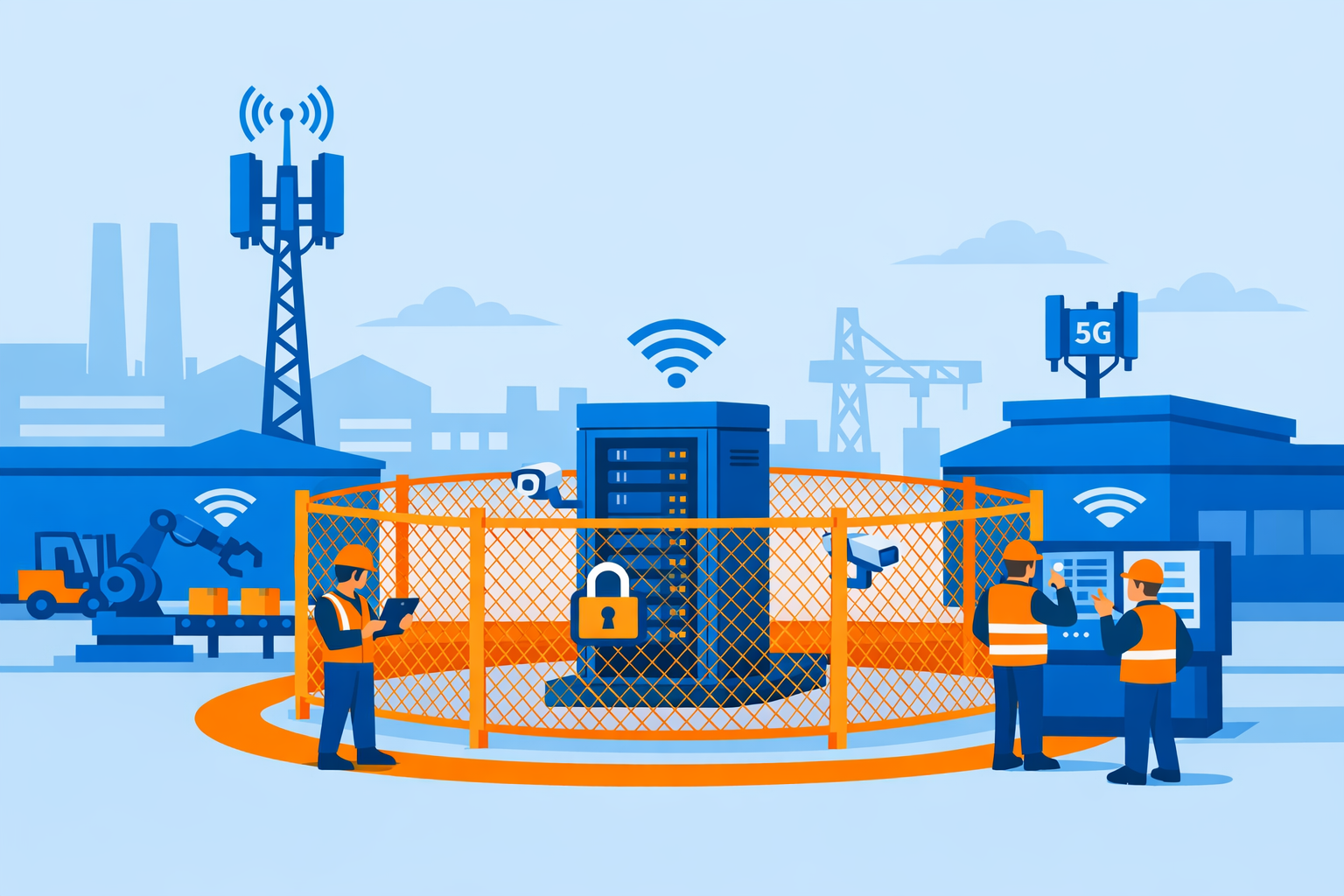
- Methods for storing, anonymizing, and sharing operational data across sites and customers
- Capabilities for logging and auditing AI-driven decisions, especially after incidents
- Frameworks for human oversight-what the AI controls autonomously vs. what requires approval
- Model update, validation, and rollback strategies for multi-site deployments to prevent operational drift
These concerns grow as AI agents move from advisory roles to direct control over robots, AGVs, and process parameters.
5. Business Models Emerging in AI Manufacturing and Factory Automation
The capital influx is shaping several business models in AI manufacturing, each with distinct opportunities and risks for automation strategies.
5.1 Comparing AI-driven factory automation models
| Model Type | Example Focus | Typical Funding Scale & Capital Intensity | Implications for Manufacturers |
|---|---|---|---|
| Factory AI coordination platforms | Arda, Physical Intelligence | $10M-$100M+ rounds, software-focused | Deep integration with existing robots and PLCs, heavy data dependency |
| General-purpose robotics foundation models | Skild AI | Multi-billion dollar rounds | Software layer for various robot types, OEM/retrofit integration, scalability |
| Humanoid & advanced robotic hardware | Figure AI, others | High combined rounds, HW + SW ($100M-$1B+) | Higher capex, longer horizons, labor substitution for manual tasks |
| Industrial software with embedded AI | MES/SCADA/PLC/cloud vendors | Mix of internal R&D and acquisitions | Incremental innovation in existing software, lower entry barriers |
| Robotics-as-a-Service (RaaS)/AI-as-a-Service | Logistics, welding, inspection providers | Venture and asset-backed funding | Opex shift, data ownership, and vendor lock-in considerations |
A central question for plant leadership is how much autonomy to assign to external platforms versus in-house control. Increasing funding for coordination platforms and humanoids means factories will interact with AI as both embedded software and autonomous systems.
6. Actionable Conclusions and Next Steps for Industrial Leaders
Recent funding for Arda and similar companies marks a lasting shift: AI is entering the real-time control of factories. Key takeaways for industrial stakeholders include:
Prioritize operationally backed use cases
Predictive maintenance, quality inspection, and production scheduling show clearer returns when combined with process redesign rather than as standalone tools.Treat data architecture as core infrastructure
AI platforms require substantial labeled video and machine data. Fragmented systems between MES, historians, and PLCs can delay benefits.Plan for workforce transitions
Research points to changing and upskilling tasks, not large-scale job loss. As AI takes part in decisions, new training and open dialogue will be necessary.Embed governance in technology selection
The EU AI Act and related standards make logging, explainability, oversight, and cybersecurity baseline requirements for safety- and workforce-impacting systems.Reassess vendor and ecosystem strategies
Choices between dedicated AI platforms, OEM robotics, or AI-enhanced existing software affect integration, data control, and flexibility.
In summary, the $70 million aimed at Arda is notable less for its amount than for what it signals: industrial automation is shifting toward software agents that sense, plan, and act across entire production systems. For manufacturers, the crucial step is building data, talent, and governance capacities to ensure AI-driven automation enhances productivity and resilience, while maintaining safety, quality, and workforce trust.
Frequently Asked Questions
How significant is a $70 million funding round in the context of industrial AI and robotics?
A $70 million raise is moderate compared to the largest industrial AI and robotics rounds, several of which exceed $100 million. Its significance lies in its focus on factory automation software amid a growing multi-billion-dollar market for industrial AI.
How is AI-driven factory automation different from traditional industrial automation software?
Traditional automation uses deterministic logic in PLCs, CNCs, and fixed process recipes. AI-driven factory automation layers probabilistic models-learning from video, sensor, and quality data-on top of these systems to handle variability and optimize in real time. These AI layers typically operate above existing controls, offering or executing adjustments under well-defined oversight.
What does the EU AI Act change for AI in smart factories?
The EU AI Act creates a risk-based legal framework that classifies many AI systems in factories as high-risk. Relevant systems influencing machine control or employment decisions must meet strict requirements for risk management, data quality, documentation, logging, transparency, human oversight, robustness, and cybersecurity. Manufacturers operating in EU markets will need traceable, ongoing processes for compliance.
Which manufacturing roles are most exposed to AI-driven workforce automation in the near term?
Tasks, rather than entire roles, face automation first. Repetitive inspections, material handling, and data entry already see automation through vision systems, cobots, and software agents. Roles requiring process knowledge, troubleshooting, cross-functional coordination, and safety-such as maintenance and process engineers or experienced operators-are likely to be augmented rather than fully automated in the near term.
How should factories approach sharing video and process data with external AI platforms?
Industrial data sharing raises concerns over intellectual property, competitiveness, and regulation. Factories are increasingly using formal frameworks specifying which data leaves the plant, how it is anonymized or aggregated, where it's stored, and under what controls it is used for training. Best practices include cybersecurity checks, clear contractual limits on data reuse, and detailed audit trails for AI model updates and deployments.