Manufacturers and logistics operators are increasingly applying lean methods to non-production areas-including restrooms, break rooms, and ancillary facilities. Early results indicate gains in employee well-being, safety, and retention. Data from industry analysts highlight reductions in workplace injuries, absenteeism, and delays in material handling when hygiene, ergonomics, and layout are optimized in these support areas.
Background
Lean manufacturing has traditionally focused on production floors through waste reduction, standardized work, just-in-time (JIT) flow, and visual management. Documented outcomes include up to 40% productivity improvements and significant reductions in lead time. The integration of safety initiatives, such as 5S (Sort, Set in order, Shine, Standardize, Sustain) and ergonomic interventions, has yielded further operational and health benefits. For example, a recent study at an aluminum casting plant reported a 38% decrease in injury rates and nearly 50% fewer lost workdays after implementing a Lean 5S + Safety program from 2022 to 2025 Injury frequency dropped 38 % and loss of workdays fell nearly 50 % after Lean 5S + Safety implementation in 2022-2025[1].
Details
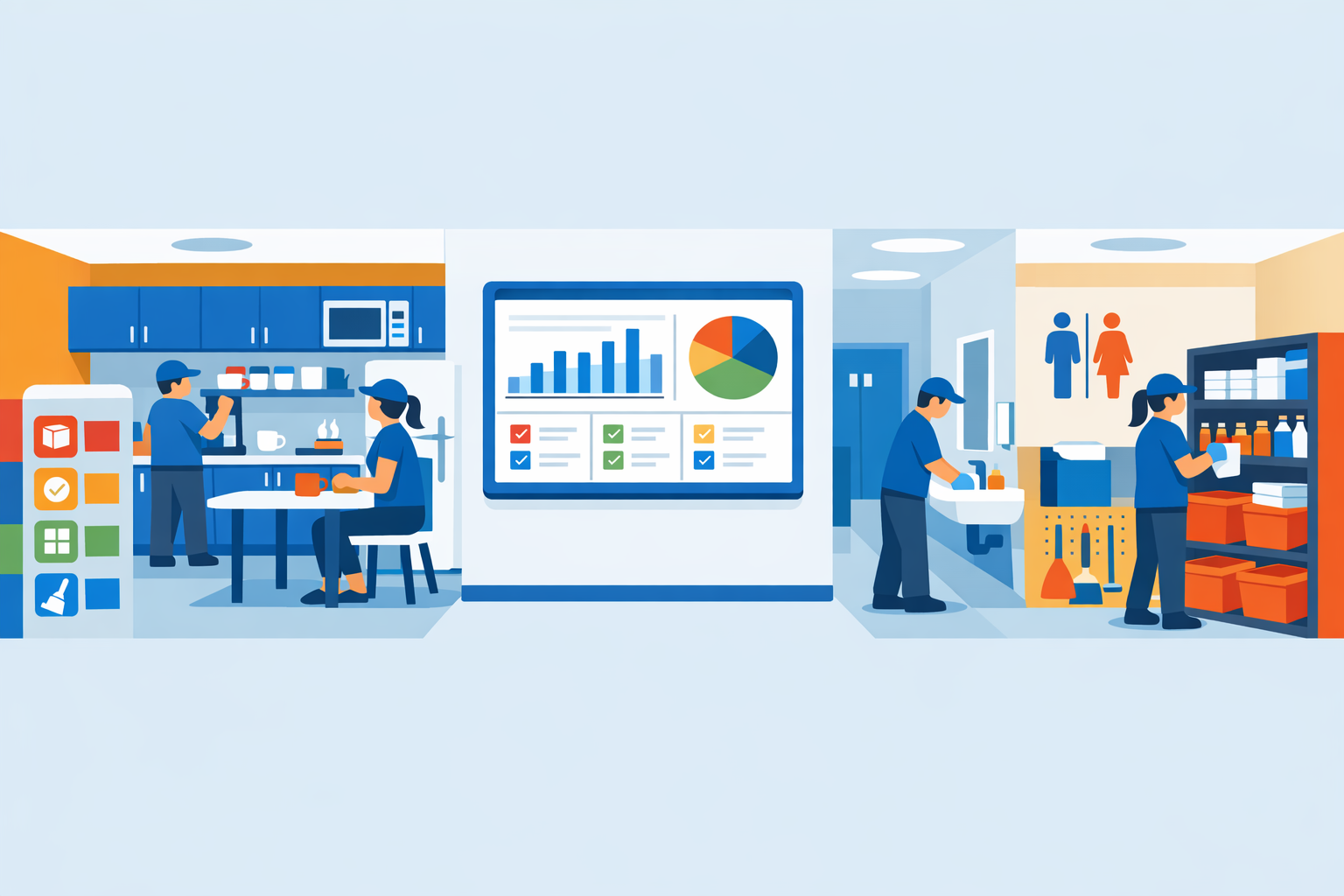
Recent pilot projects at industrial sites extend lean tools-including standardized layouts, signage, ergonomic fixtures, and digital dashboards-into restrooms and break rooms. These tools are used to manage hygiene, reduce unnecessary movement, and improve comfort. While comprehensive peer-reviewed studies remain limited, initial implementations report similar benefits to those seen in manufacturing environments: reduced time to access support areas, fewer maintenance requests, and improved incident reporting. Early adopters note improved employee retention and daily performance, though results remain site-specific and unpublished.
Lean's synergy with ergonomics is well established in production: deploying ergonomic principles alongside lean methods enhances safety, reduces absenteeism, and improves reliability. Ergonomics focuses on workstation and process design that supports health and safety, resulting in lower injury rates and higher job satisfaction, as well as decreased absenteeism and improved quality Ergonomic workplace design improves reliability, reduces absenteeism and enhances output quality[2]. Applying these principles to support areas is expected to yield similar outcomes.
Safety integration within lean thinking reinforces the value of extending these methods to non-production spaces. Lean methodologies consider workplace injuries and associated costs as waste. Embedding safety into processes-including the design of break rooms and restrooms-supports lean objectives by promoting cleaner and safer environments Lean treats workplace injuries as waste and integrates safety into operational processes to reduce time and resource losses[3].
Outlook
Facilities and human resources teams are expected to conduct baseline assessments in high-traffic areas, tracking metrics such as restroom and break-room cycle times, incident reports, absenteeism, and layout-driven inefficiencies. Scalable governance models-such as cross-functional teams and standardized layout guidelines-are likely to support ongoing improvements. Compliance with Occupational Safety and Health Administration (OSHA) regulations, accessibility standards, and environmental controls will shape these initiatives. As additional case data become available, industry adoption of lean in non-production spaces may become standard practice.