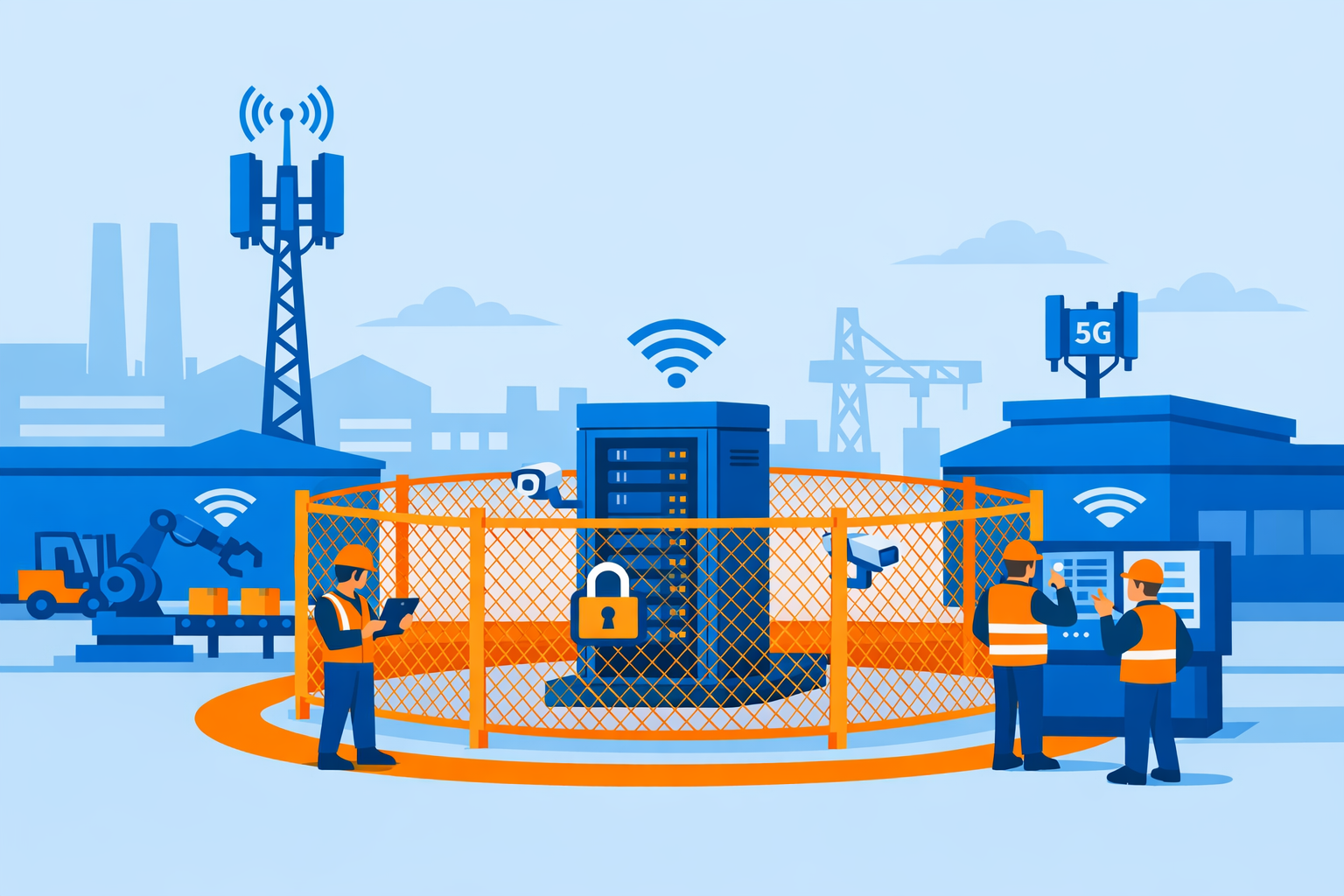
Industrial operators are deploying industrial IoT (IIoT) SIM cards to ensure secure and reliable connectivity in robotics, automated packaging, and warehouse systems as regulatory demands and downtime costs rise. These SIMs provide multi-carrier failover and advanced device authentication, meeting latency and resilience needs in time-critical automation. Regulatory developments-including the Cyber Resilience Act (CRA), the revised Radio Equipment Directive (RED), and NIS2-are prompting manufacturers to embed secure connectivity throughout the product lifecycle.
Background
Time-sensitive automation, such as robotics and packaging lines, depends on network reliability to maintain throughput. Industrial SIMs with eSIM or multi-IMSI (International Mobile Subscriber Identity) support enable automatic failover between LTE, 5G, and satellite links, limiting coverage-related outages and maintaining low latency. Platforms that monitor signal quality, latency, and outages are essential in these deployments, automatically triggering rerouting when necessary.[1]
EU regulations are tightening security requirements for IoT components. The Cyber Resilience Act, taking effect in December 2024, mandates manufacturers of digital products-including industrial communication devices-to implement security by design, provide automatic security updates, and comply with incident reporting before full enforcement on December 11, 2027.[2]
The Radio Equipment Directive will require enhanced cybersecurity for wireless devices-including IoT and radio cards-starting August 1, 2025. Mandates cover communication protection, network risk prevention, and secure software controls such as secure boot and digital signatures.[3]
NIS2, in force since late 2022, broadens cybersecurity obligations for essential services like manufacturing and digital infrastructure. This includes requirements for risk management and incident notification.[4]
Details
Using industrial SIMs, operators can segment IIoT devices onto dedicated networks, enforce authentication by SIM credentials, and isolate automation traffic from broader enterprise systems. This segmentation reduces the attack surface and streamlines compliance with evolving wireless and cybersecurity regulations. Regulatory drivers and risk mitigation are prompting plants to standardize connectivity under SIM-based frameworks, consolidating management to reduce outages and ensure uniform device authentication across multiple networks.
Operators report reduced downtime, improved throughput, and higher service levels. In automated packaging operations, network disruptions translate directly to lost cartons and delayed shipments, underscoring the need for robust connectivity. Industrial SIM platforms often feature dashboards for monitoring network health and latency, allowing proactive intervention.[1]
Technical best practices emphasize edge connectivity. Deploying intelligent SIM modules at edge gateways enables local failover and traffic steering between cellular, private LTE/5G, and satellite networks. These strategies help control latency for robotics and reserve bandwidth for critical telemetry.
Outlook
Manufacturers and integrators in industrial automation are expected to broaden adoption of standardized industrial SIM architectures across EU facilities to comply with CRA, RED, and NIS2. Equipment vendors may introduce modules with embedded SIMs aligned to secure-by-design requirements under CRA. Progressive enforcement-such as Article 14's incident reporting from June and full CRA application by December 2027-is expected to accelerate connectivity upgrades as operators seek to avoid non-compliance penalties.