Factory deployments of humanoid robots are moving beyond proof-of-concept as OEMs publish quantified pilot results, new safety standards reach draft publication, and manufacturers confront the workforce development demands of sustained human-robot collaboration. Evidence from completed pilots-including a landmark automotive deployment-provides the first documented performance benchmarks against which return on investment can be measured, while a maturing regulatory framework is narrowing the certification path for volume rollout.
Background
Humanoid robots began transitioning from laboratory environments to active production lines in earnest during 2024-2025, driven by converging pressures: persistent manufacturing labor shortages, reshoring initiatives, and rapid hardware cost reduction. According to Goldman Sachs data cited in Deloitte's 2026 Tech Trends report, manufacturing costs for humanoid robots dropped 40% between 2023 and 2024, and Bank of America projects unit costs will fall below $17,000 by 2030, down from current Western-market pilot pricing of $90,000-$100,000 per unit. Investment has tracked the same trajectory: according to Crunchbase and Bank of America data, humanoid-specific startup funding reached $4.3 billion in 2025-a six-fold increase from 2018.
Early deployments have concentrated on structured, low-complexity tasks-tote handling, palletizing, line feeding, and pick-and-place operations-where predictable environments reduce task-switching risk. Bain & Company's Technology Report 2025 confirms that initial deployments remain largely confined to highly structured settings. Automotive has led adoption, accounting for the majority of early humanoid pilots.
The regulatory landscape is evolving in parallel. ANSI/A3 R15.06-2025 represents the most significant U.S. robotics safety revision in over a decade, while a working group including representatives from A3, Agility Robotics, and Boston Dynamics has addressed humanoid-specific risks in a draft for ISO 25785-1, published in May 2025, covering "industrial mobile robots with actively controlled stability." Rather than treating "collaborative robot" as a robot type, the updated ANSI standard focuses on the application, enabling more nuanced safety controls in human-robot interaction environments.
Pilot Results and Integration Challenges
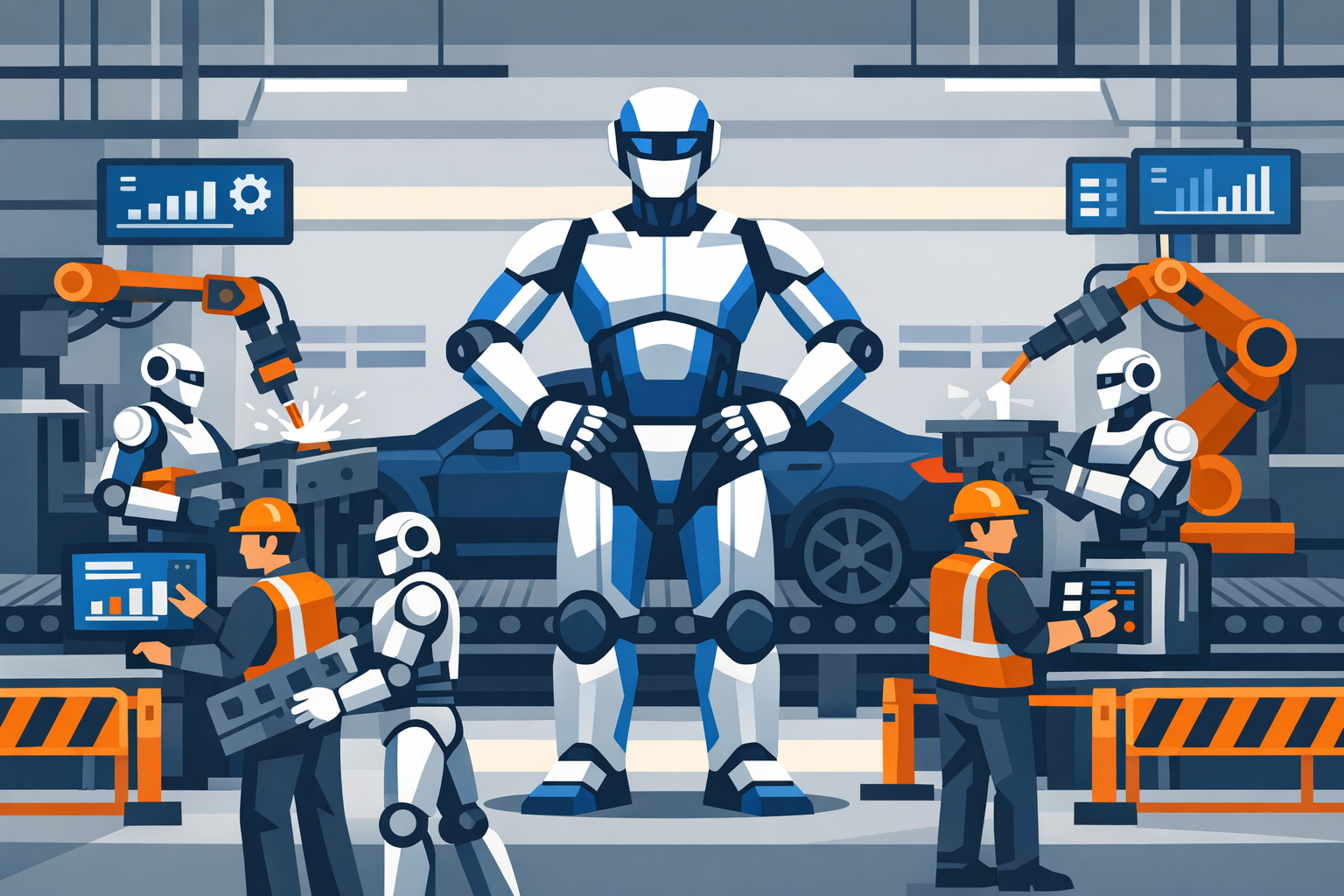
The most publicly documented production-scale deployment to date is BMW Group's completed pilot at its Spartanburg, South Carolina, plant. According to Figure AI, two Figure 02 robots ran 10-hour shifts Monday through Friday, accumulating 1,250 hours of runtime, and contributed to the production of more than 30,000 BMW X3 vehicles while loading over 90,000 parts. Published performance data indicates the robots achieved greater than 99% placement accuracy per shift and met 84-second cycle time targets. The task-precise sheet metal positioning for welding-required parts placement within a 5-millimeter tolerance in under 2 seconds.
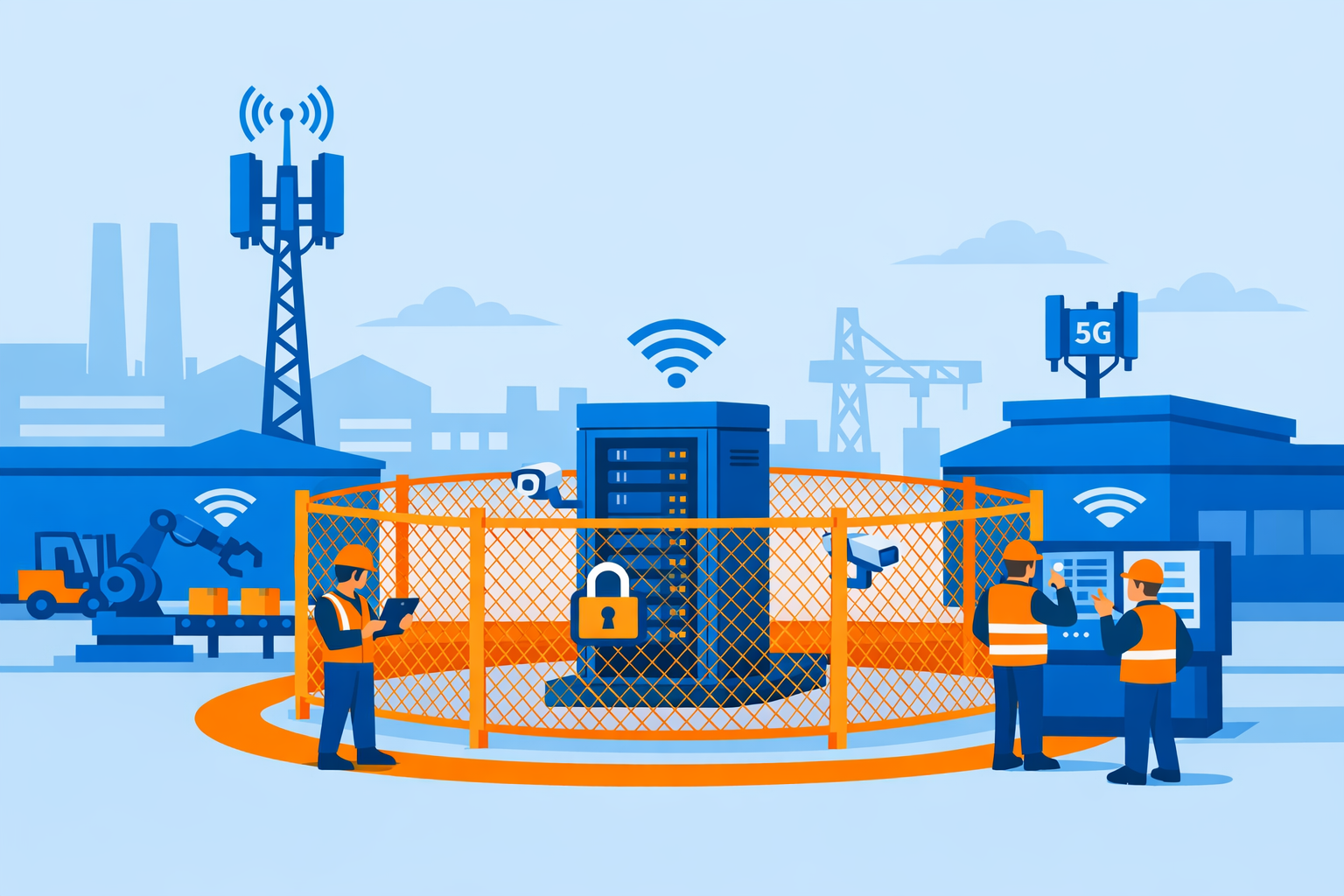
The pilot also yielded insights into revised safety concepts involving additional barriers and partitions, as well as improved 5G coverage; the transition from lab operations to shift work progressed faster than expected. Following the Spartanburg results, BMW launched its first European pilot at Plant Leipzig in collaboration with Hexagon Robotics, which specializes in Physical AI and introduced its AEON humanoid robot in June 2025. An initial test deployment began in December 2025, with a further deployment planned from April 2026 ahead of a full pilot phase in summer 2026.
Safety integration remains a central technical hurdle. Humanoids' expanded capabilities and connectivity raise the stakes for cybersecurity, particularly scenarios in which safety systems could be bypassed-underscoring the need for more rigorous protocols. Safety systems for fenceless operations must mature before robots can leave controlled zones without regulatory compliance gaps. According to McKinsey, current gains come from predictable routes and repeatable tasks, not high-dexterity assembly.
IT and OT integration presents an equally significant bottleneck. Successful pilots have relied on standardized interfaces and plant-wide connectivity: at Spartanburg, the humanoid robot was integrated into BMW's smart robotics ecosystem via standardized interfaces, interacting seamlessly with existing systems. Bain & Company advises manufacturers to upgrade IT/OT capabilities, invest in data infrastructure and safety standards, and broaden automation adoption as familiarity with humanoid capabilities grows.
Workforce readiness is emerging as a non-negotiable prerequisite. Companies and governments are investing in upskilling workers for the robot-augmented economy, with evidence that involving workers in the design and implementation process leads to more effective integration and reduced resistance. New role categories-including robot trainers, maintenance technicians, and human-robot interaction supervisors-form the operational backbone of humanoid deployments. Workers relieved from repetitive or hazardous tasks can transition to roles requiring human judgment and oversight. Packaging line workers, for example, have moved into supervising multiple cobots and managing production data-roles that are more skilled and potentially higher paid.
Outlook
According to Yole Group, the global humanoid robot market will reach $6 billion in 2030 and climb to $51 billion by 2035, with shipments rising to approximately 136,000 units in 2030 and more than 2 million by 2035. Industry analysts currently estimate ROI timelines of 18 to 24 months for warehouse and manufacturing deployments at current pricing, compressing to under 14 months as unit costs fall toward $30,000. According to Bain & Company, converting capability into commercial traction will require clear regulatory pathways, rigorous safety and certification regimes, workforce acceptance, and public trust. Progress on those fronts will ultimately determine how quickly humanoid robots shift from headline grabbers to everyday production assets.