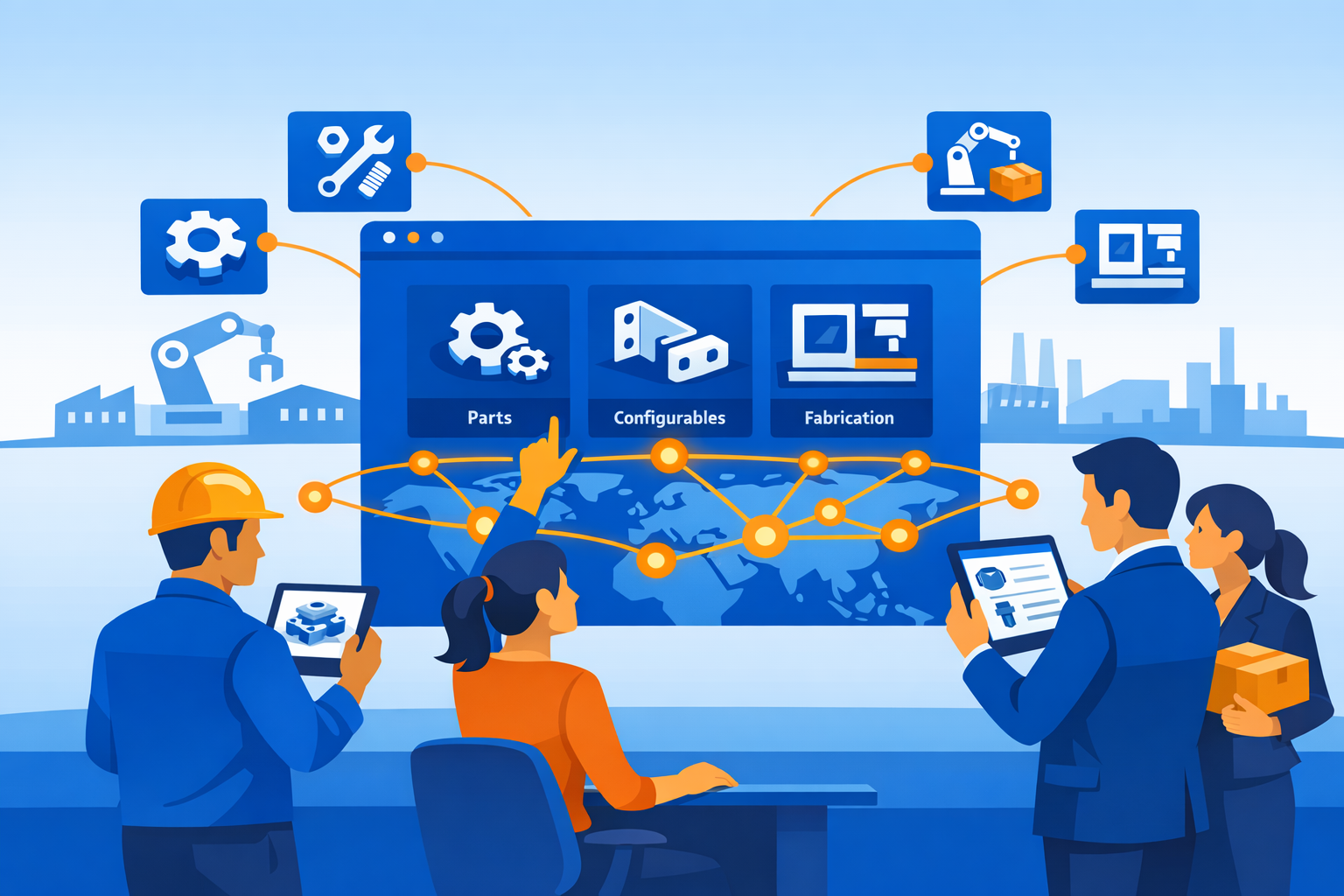
A coordinated wave of federal grant programs is now explicitly linking U.S. manufacturing workforce development to edge artificial intelligence (AI) and private fifth-generation (5G) network deployments, signaling a policy shift toward treating connectivity infrastructure and human capital as co-dependent investments.
Background
The alignment between workforce funding and advanced network infrastructure reflects a broader federal strategy laid out in the White House's July 2025 America's AI Action Plan. Following a January 2025 executive order removing barriers to AI leadership, the White House announced the comprehensive AI Action Plan on July 23, 2025, outlining the Trump administration's vision for securing U.S. dominance in artificial intelligence. Among its directives, the plan calls for training the U.S. workforce in AI infrastructure and bolstering critical infrastructure cybersecurity.
The manufacturing sector is a direct target. According to the 2025 Manufacturing Momentum Report, 43 percent of manufacturers have now identified specific AI applications for their operations. Yet deployment has stalled in part due to a widening talent deficit. As private 5G networks gain traction across industries, a shortage of skilled professionals to design, deploy, and maintain these systems threatens to slow adoption. Building and managing 5G edge products requires expertise in telecommunications, IT, and cloud-native software - skills that remain scarce in the workforce.
Details
The largest single workforce instrument is the Department of Labor's Industry-Driven Skills Training Fund. On August 13, 2025, the U.S. Department of Labor announced up to $30 million in funding through the Industry-Driven Skills Training Fund grant program to accelerate workforce innovation and address critical workforce needs nationwide. Administered by the Employment and Training Administration (ETA), the grants provide outcome-based reimbursements to employers for training in high-demand and emerging industries aligned with Executive Order 14278 and America's AI Action Plan. Priority industries include artificial intelligence infrastructure, advanced manufacturing, nuclear energy, domestic mineral production, and information technology. Individual awards range from $3 million to $8 million to state workforce agencies that form partnerships with employers committing to train current employees and create pathways for new hires. Eligible activities include classroom instruction, customized training, and on-the-job learning, with 90 percent of grant funds required to go toward employer reimbursements.
On the infrastructure research side, NIST has committed capital directly to the manufacturing-cybersecurity nexus. The agency expanded its collaboration with the nonprofit MITRE Corporation, investing $20 million to establish two centers to advance AI-based technology solutions that strengthen U.S. manufacturing and cybersecurity for critical infrastructure. The centers are the AI Economic Security Center for U.S. Manufacturing Productivity and the AI Economic Security Center to Secure U.S. Critical Infrastructure from Cyberthreats. The critical-infrastructure center will address cybersecurity by enabling real-time threat detection, automating responses, predicting failures, and analyzing vast datasets for emerging risks.
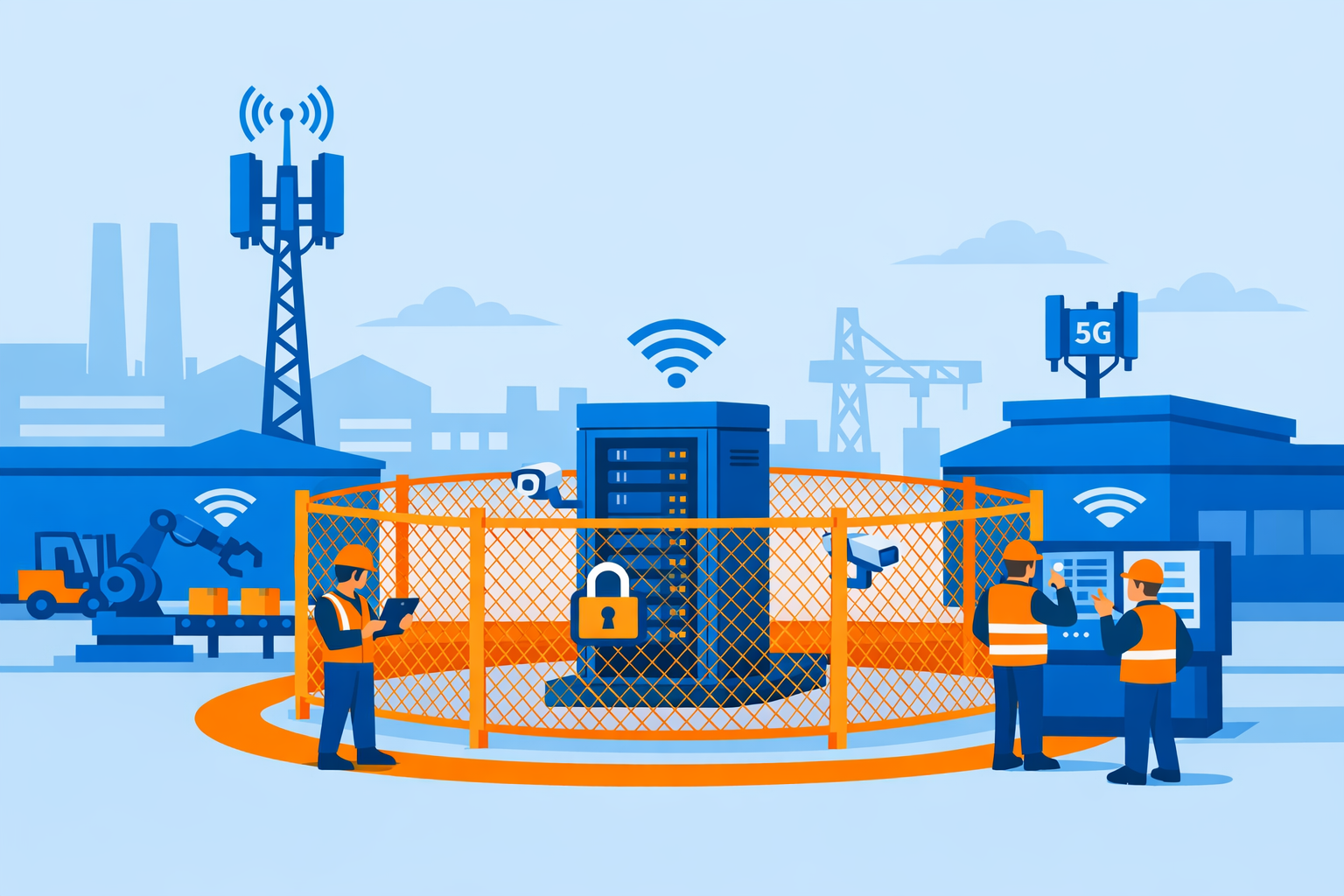
Many industrial sectors have faced ransomware and foreign hacking campaigns over the past decade, and the speed and scale advantages of large language models could place additional strain on IT and security teams - many of whom already operate with chronically underfunded budgets. The cybersecurity concern is acute for factories deploying converged OT/IT architectures, precisely the environments where private 5G and edge AI are being integrated. Private 5G enables real-time quality control by streaming high-definition vision data to edge compute for instant defect detection and secure OT/IT convergence with built-in isolation and encryption, transforming fragmented, unreliable data streams into a trusted, deterministic data plane that both OT and IT teams can rely on.
The NIST Hollings Manufacturing Extension Partnership (MEP) provides an additional delivery channel. Congressional appropriators preserved $175 million in FY2026 funding for NIST's Hollings Manufacturing Extension Partnership program, which funds a national network of centers across all 50 states and Puerto Rico serving small- and medium-sized U.S. manufacturers. With that funding, MEP continues to help narrow the workforce gap, mitigate supply chain vulnerabilities, and provide critical cybersecurity training and technical assistance for adopting advanced manufacturing practices.
For mid-market manufacturers, the grant structure introduces both opportunity and risk. The administration proposes allowing agencies to terminate grants that fail to meet first-year benchmarks and pay-for-performance contracts that place risk and costs on service providers prior to payment. Smaller facilities with limited administrative capacity may struggle to meet those governance demands - a concern raised by program observers watching early rollouts.
Outlook
NIST has signaled further investment is forthcoming. In the coming months, the agency plans to announce its award for the AI for Resilient Manufacturing Institute through the Manufacturing USA program. With up to $70 million in investment over a five-year period from NIST and at least that much in non-federal funding, the institute will bring together expertise in AI, manufacturing, and supply chain networks to promote manufacturing resilience. That award, combined with private capital flows, will likely determine whether mid-market plants gain meaningful access to edge AI and private 5G upskilling programs - or whether the benefits concentrate among large integrators with the resources to navigate multi-agency compliance requirements.