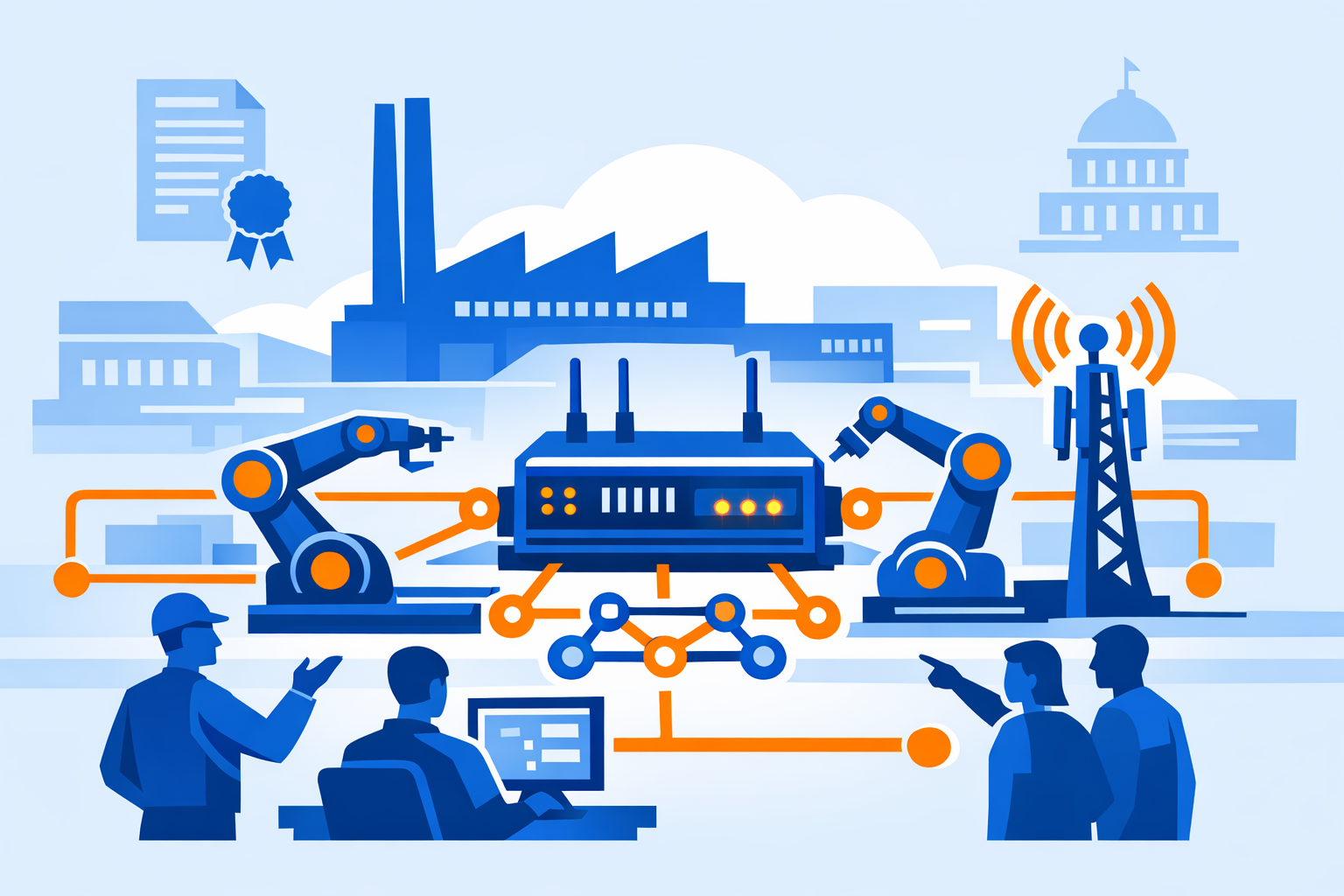
U.S. federal agencies have launched a coordinated wave of grant programs that explicitly pair regional manufacturing workforce training with on-site deployments of edge AI and private 5G networks, accelerating a policy shift that treats technology adoption and workforce development as inseparable objectives.
Background
The convergence of workforce and technology funding reflects a broader strategic reorientation in Washington. The U.S. Department of Labor awarded more than $86 million in workforce training grants to 14 states in September 2025, aligning the funding with "AI-enabled technologies" alongside manufacturing, shipbuilding, and aerospace, according to the department. The administration's workforce plan, issued in response to an April 2025 White House directive, made its sectoral priorities explicit: the plan identified manufacturing and adjacent industries-including semiconductors, aerospace, shipbuilding, biopharmaceuticals, and data centers-as the primary focus for federally backed workforce investment.
The technology backdrop is equally significant. The global private 5G network market reached approximately $7.57 billion in early 2026, up from $5.08 billion in 2025, driven by industrial automation demand, according to market research. Manufacturing accounts for 32% to 37% of total private 5G revenue, making it the largest vertical demand driver. According to Ericsson, private 5G paired with edge computing delivers data processing and decision-making at the source, enabling ultra-low latency and local data control that cloud architectures cannot replicate for time-critical factory operations.
Details
The most substantial new federal mechanism is the NSF TechAccess: AI-Ready America initiative, which allocates up to $224 million to establish as many as 56 state and territory coordination hubs, each receiving up to $1 million per year for three years, according to the NSF funding solicitation. The program, launched in late March 2026 and formally backed by a memorandum of understanding between NSF and the Department of Labor, targets AI adoption in priority sectors including advanced manufacturing, healthcare, financial services, and agriculture. The DOL committed to connecting the hubs to American Job Centers, registered apprenticeship programs, and its AI Workforce Hub infrastructure.
At the state level, Wisconsin's Department of Workforce Development received $7.3 million in competitive federal grant funding in February 2026, with grant applications under the resulting WisTRAIN program set to open in May 2026 for employers in advanced manufacturing and AI applications including predictive maintenance, cybersecurity, data analytics, and robotics.
Separately, the DOL's Employment and Training Administration announced $30 million for the Industry-Driven Skills Training Fund in August 2025, awarding grants of up to $8 million to state workforce agencies to create employer-led training funds in high-demand and emerging industries. Grants are structured as outcome-based reimbursements, placing performance accountability on employers.
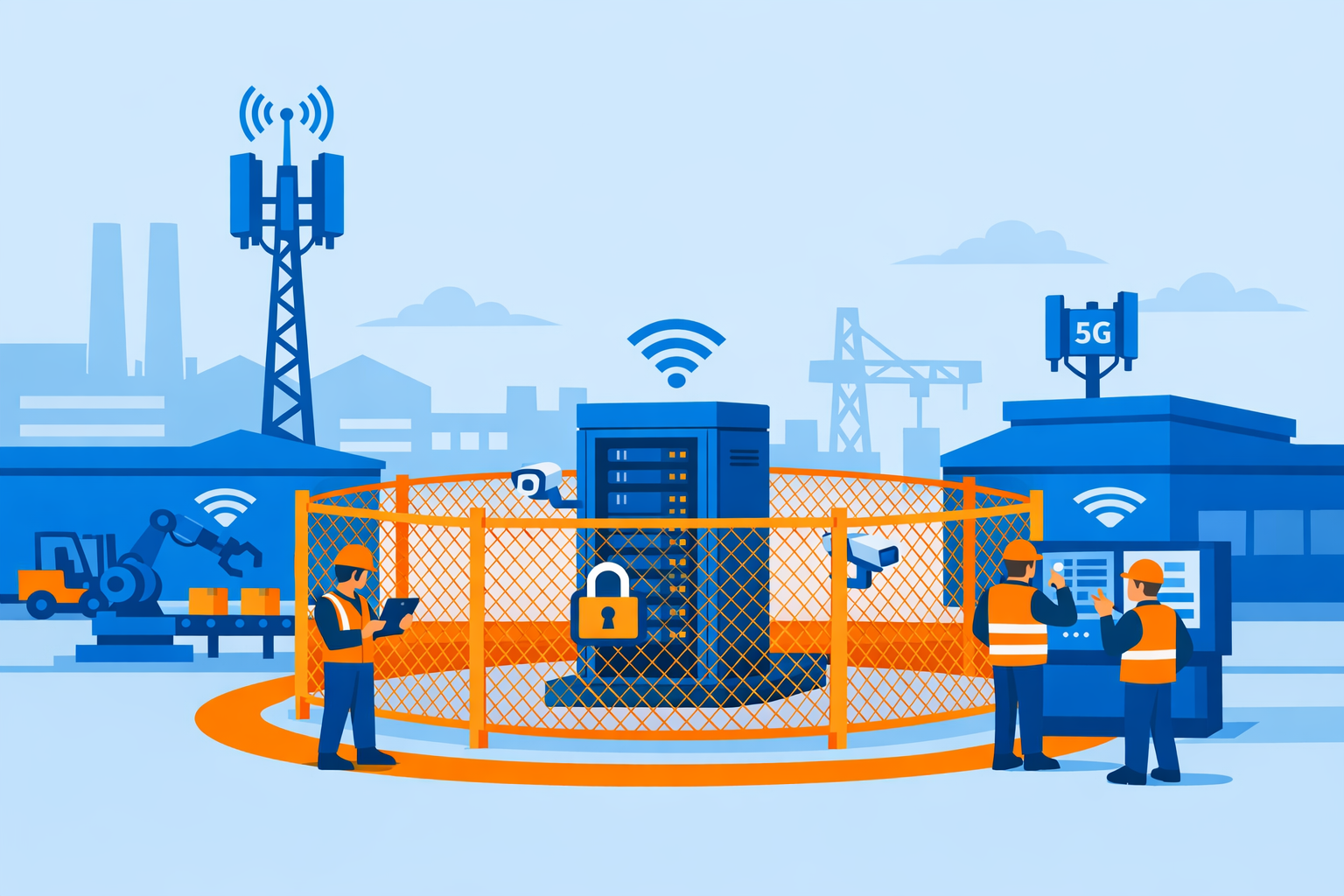
The technology deployments these programs support carry significant cybersecurity implications. At Mobile World Congress 2026 in March, Siemens announced a verified cybersecurity solution for industrial private 5G networks developed in collaboration with Palo Alto Networks, combining Siemens' on-premises private 5G infrastructure with AI-driven next-generation firewall technology and continuous production monitoring. The solution ensures data sovereignty and low-latency communication independent of mobile network operators-a requirement that aligns directly with data residency constraints embedded in federal program eligibility. A 2025 Deloitte smart-manufacturing survey found that 68% of manufacturing leaders had assessed cybersecurity risks in their industrial technology stacks, according to the World Economic Forum.
AI-integrated industrial networks saw a 34% year-over-year increase in cyberattacks between 2024 and 2025, according to industry data, compounding the urgency of embedded security in factory-floor AI rollouts.
Outlook
The first round of NSF TechAccess Coordination Hub proposals is due July 16, 2026, with up to 10 hubs to be selected in that initial round, followed by 20 in round two and the remainder in round three. The DOL has indicated it may issue additional rounds of grants under the Industry-Driven Skills Training Fund as further appropriations become available. For manufacturers scaling edge AI pilots into full production, federal programs now explicitly require employer validation, defined career pathways, and documented technology deployment outcomes-conditions reshaping how OEMs and Tier 1 suppliers structure university-industry partnerships.