A convergence of federal funding programs now conditions access to smart manufacturing grants on measurable workforce training and cybersecurity awareness, placing compliance obligations squarely on plant-level operations teams.
Across multiple agencies - the U.S. Department of Labor (DOL), the National Institute of Standards and Technology (NIST), and the Department of Homeland Security (DHS) - grant programs covering Edge AI deployments, private 5G infrastructure, and operational technology (OT) modernization increasingly require applicants to demonstrate structured employee training plans before funds are disbursed. The policy shift reflects an administration-wide push, codified through executive actions in April 2025, to treat AI and industrial technology competency as a condition of federal economic support rather than a discretionary investment.
Background
The mandate emerged from two executive orders signed in April 2025 - Executive Order 14277, "Advancing Artificial Intelligence Education for American Youth," and Executive Order 14278, "Preparing Americans for High-Paying Skilled Trade Jobs of the Future" - which directed multiple departments to redesign training pipelines for emerging industrial sectors. The Trump administration's AI Action Plan subsequently established three pillars - accelerating innovation, expanding infrastructure, and maintaining technological leadership - each dependent on workforce readiness.
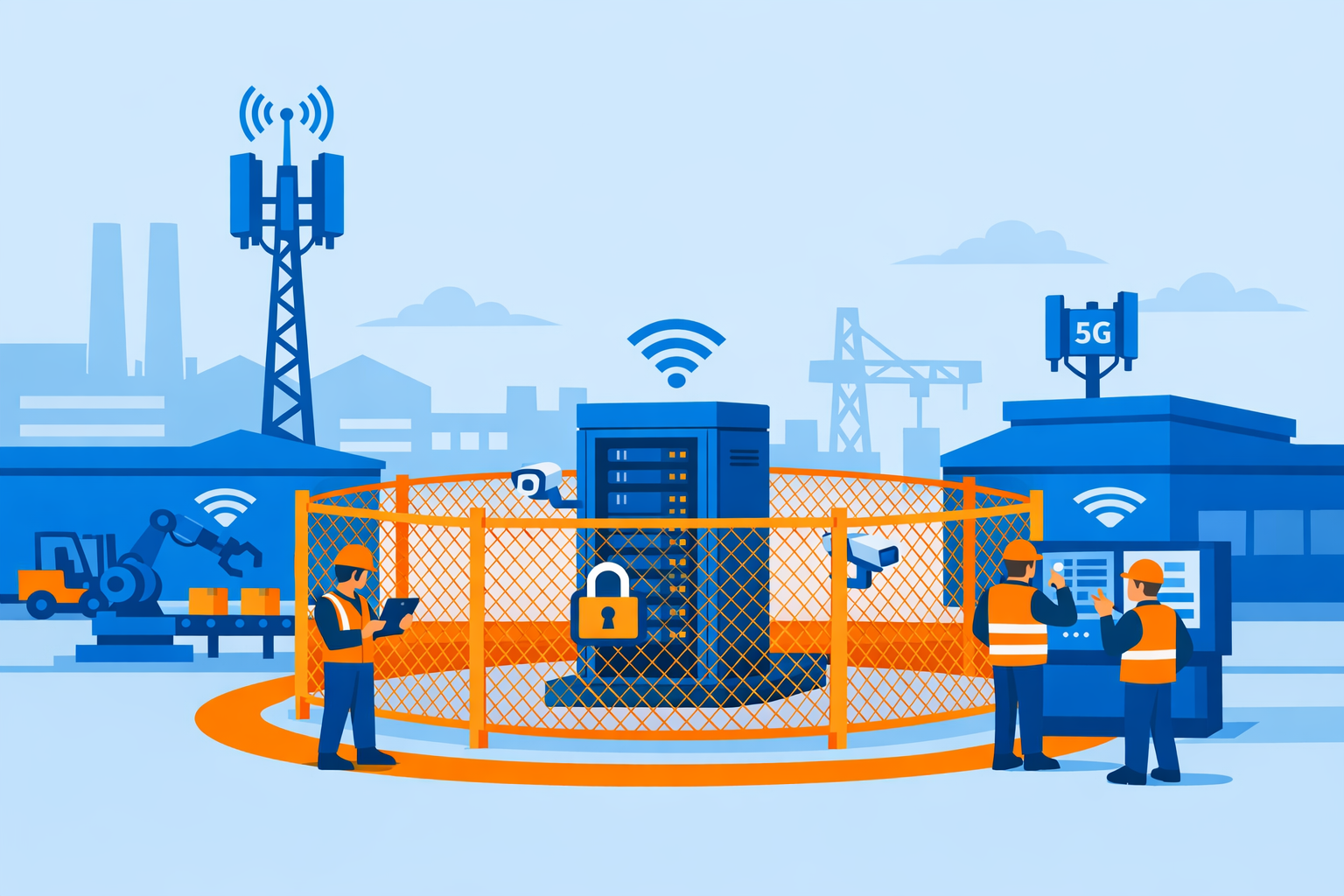
Meanwhile, the manufacturing sector faces acute security pressure tied directly to its technology modernization. According to IBM's X-Force threat intelligence reporting, manufacturing remained the most attacked industry in 2025, accounting for 27.7% of incidents observed. The SANS 2026 Cybersecurity Workforce Report found that 57% of organizations report delayed projects due to workforce limitations, while 27% have experienced breaches as a direct consequence of skills gaps. On the shop floor, IT/OT convergence is expanding attack surfaces as private 5G and Edge AI systems integrate with supervisory control and data acquisition (SCADA) and manufacturing execution systems (MES), creating threat vectors that traditional IT-centric security programs are not designed to address.
Details
Several grant programs now carry explicit workforce training conditions. The DOL's Industry-Driven Skills Training Fund made $30 million available, with individual awards of up to $8 million allocated to state workforce agencies to develop and expand employer-led training programs. Separately, the DOL awarded more than $86 million in workforce training grants to 14 states, with the Employment and Training Administration (ETA) reimbursing employers directly for skills training delivered to newly hired and incumbent workers in manufacturing, advanced technology, and related sectors.
On the research and deployment side, NIST is investing up to $70 million over five years through its AI for Resilient Manufacturing Institute competition, structured as a public-private partnership. Eligibility criteria require applicants to submit integrated Education and Workforce Development (EWD) plans, including curriculum for AI-enabled manufacturing, identification of regional skills gaps, and documented outreach to underrepresented communities. NIST separately committed $20 million to establish two AI Economic Security Centers - one focused on U.S. manufacturing productivity, the other on securing critical infrastructure from cyber threats - with the partnership operated through MITRE Corporation.
Cybersecurity training requirements carry their own reporting structure. FEMA's Fiscal Year 2025 State and Local Cybersecurity Grant Program (SLCGP) allocated $91.75 million through the Infrastructure Investment and Jobs Act. Grant recipients with an approved Cybersecurity Plan were required to reaffirm or revise their plans by January 30, 2026, and all funded projects must document implementation of key cybersecurity best practices as specified in the program's Notice of Funding Opportunity (NOFO). For manufacturers engaged in OT/IT convergence projects, this framework directly affects how private 5G and Edge AI deployments are scoped, documented, and reported to federal oversight bodies.
The White House AI policy framework further conditions federal support - including grants, tax incentives, and regulatory relief - on demonstrable training outcomes. Companies receiving AI-related grants must now demonstrate that they are training employees or investing in regional training ecosystems, with employers who ignore training mandates risking loss of access to federal contracts, R&D funding, and manufacturing incentives.
At the vendor and infrastructure level, cybersecurity capabilities are being built into private 5G architecture itself. At Mobile World Congress 2026, Siemens and Palo Alto Networks announced a verified cybersecurity solution for industrial private 5G, combining Siemens' Private 5G infrastructure with Palo Alto Networks' Next-Generation Firewall (NGFW) specifically optimized for AI and OT environments.
Outlook
Manufacturers planning capital expenditure around Edge AI or private 5G should treat workforce training and OT cybersecurity documentation as grant prerequisites rather than post-deployment activities. NIST's announcement of the AI for Resilient Manufacturing Institute award is expected in the coming months, following the conclusion of the two-stage application process. The SANS 2026 report indicates that regulatory influence on hiring and skills decisions has risen to 95% across organizations, suggesting compliance pressure will intensify regardless of whether individual facilities receive direct federal funding.