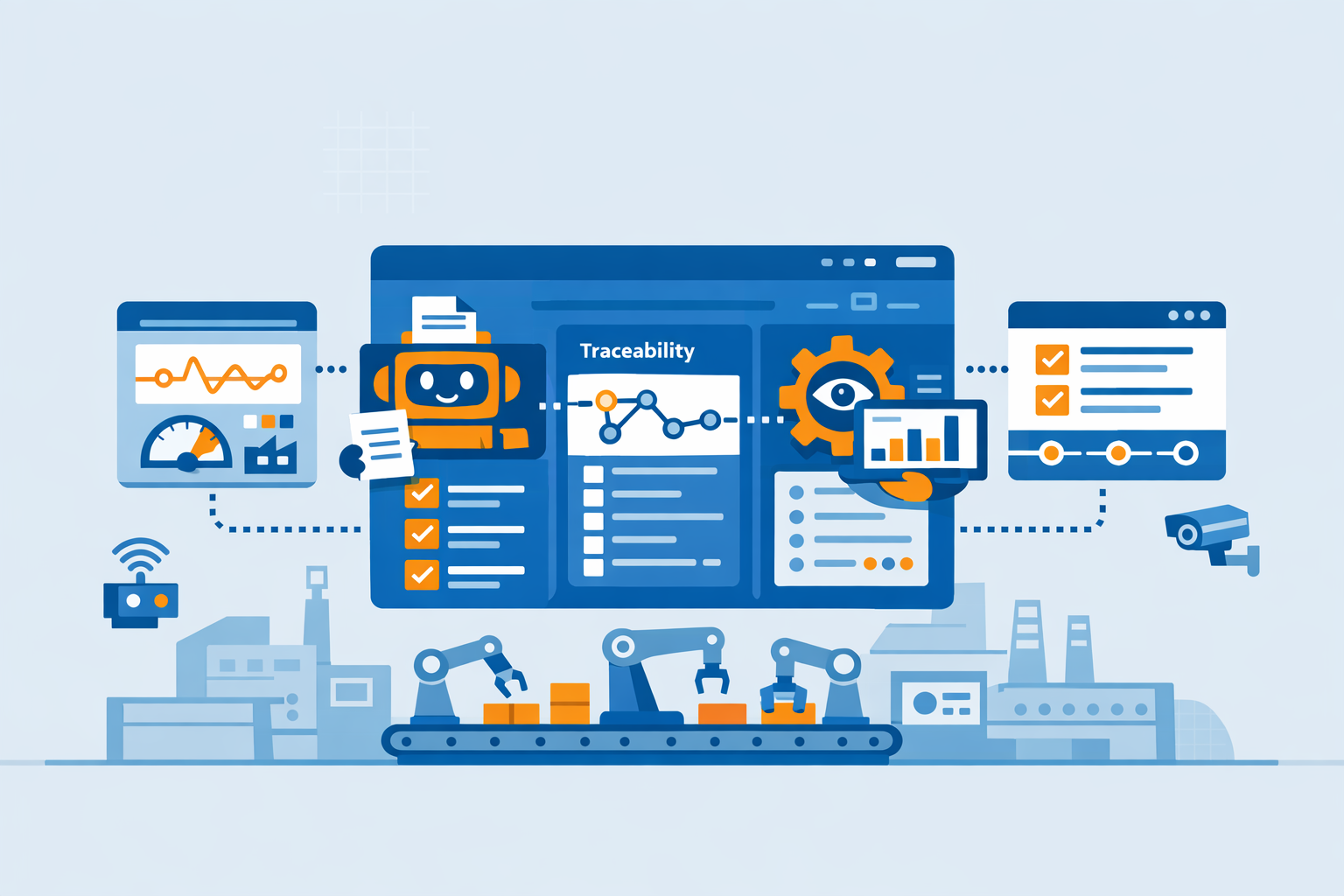
Lean product lifecycle management (PLM), augmented with artificial intelligence (AI) agents, is delivering measurable improvements in manufacturing quality, traceability, and compliance. A phased, scalable deployment was conducted across product lines and facilities, beginning with pilot projects in engineering and quality departments. The process advanced through integration with manufacturing execution systems (MES) and enterprise resource planning (ERP), concluding with an enterprise-wide rollout. This staged approach enabled controlled adoption and provided data governance insights at each phase.
Background
Lean PLM optimizes product lifecycle processes by reducing waste and strengthening traceability across design, approval, and production activities. The addition of AI automates traceability and compliance tasks, generates audit-ready documentation, and supports quality-by-design initiatives. Research indicates that AI-driven compliance checks can reduce manual testing by 31%, raise test coverage by 27%, lower scrap rates by 28%, and increase overall equipment effectiveness by 23%[1]. In regulated sectors such as medical devices, embedded AI agents deliver real-time traceability matrices and active regulatory compliance support[2].
Details
Manufacturers implementing lean PLM with AI agents cited key returns on investment. Early pilot phases targeted documentation and regulatory review workflows, where AI reduced compliance documentation time by over 50% and cut compliance-related delays by about 41%[1]. AI-integrated PLM facilitated real-time anomaly detection from as many as 500 sensors with 95% accuracy, resulting in a 28% drop in scrap and a 23% increase in overall equipment effectiveness[1]. Automated AI agents managed regulatory requirement retrieval, system mapping, and compliance validation, yielding precise traceability and reducing oversight risks[2]. Data governance was reinforced through immutable audit trails, ensuring agent-generated decisions remained traceable and aligned with compliance protocols[3].
PLM vendors have rolled out targeted AI functionalities. Trace One's 2026 Copilot features AI agents for automated raw material onboarding, regulatory extraction via conversational queries, and certificate management within master data[4]. Siemens' PLM suite offers lean management tools, real-time production visibility, KPI tracking, compliance support, and integrated quality dashboards[5]. Recent work by Fraunhofer and Accenture on modular agent architectures for technical documentation shows validation agents can reduce manual effort by approximately 20% and speed content creation by up to 30%, while maintaining regulatory precision using retrieval-augmented generation (RAG) and rule-driven validation[6].
Risk assessments highlighted possible disruptions to certification data stemming from AI interactions with PLM or quality management systems (QMS)-notably in additive manufacturing under standards such as AS9100 or ISO 13485. Organizations mitigated these risks through phased rollouts beginning with read-only access, implementing dual-entry verification of agent changes, and deploying immutable logs to preserve certification records[7].
Outlook
Expanding the deployment of lean PLM with AI agents will require ongoing investment in data governance, audit trail structures, and cross-system MES and ERP integration. Upcoming steps include monitoring ROI metrics, strengthening AI governance protocols, and validating regulatory acceptance across multiple jurisdictions.