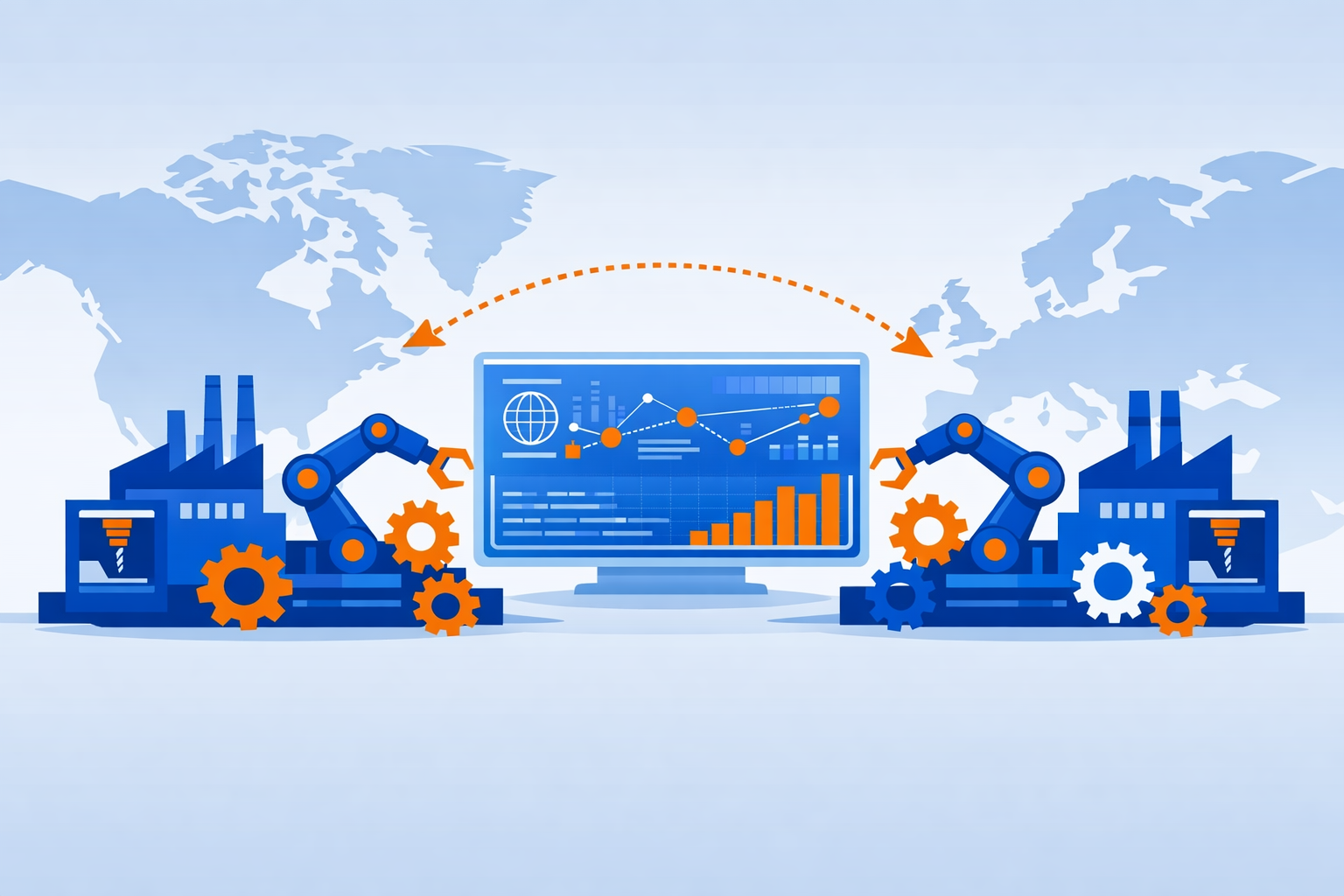
Norck Robotics has established synchronized engineering hubs in Irvine, California, and Mannheim, Germany to accelerate automation deployments in North America and Europe. Implemented by early March 2026, the dual-hub model supports rapid prototyping, regional regulatory compliance, and unified engineering standards, aiming to reduce time-to-value for AI-driven automation initiatives.
Background
Norck Robotics operates as the automation and engineering division of Norck, a precision manufacturing provider certified to ISO 9001:2015. The company supplies custom robotics components and precision CNC machining for aerospace, automotive, and electronics sectors. The hub expansion marks a shift toward integrated service delivery across Norck's manufacturing and supply networks throughout Europe and North America[1].
Details
On March 10, 2026, Norck announced the launch of its binational hubs, designed to share expertise in robotics engineering, precision machining, motion-control systems, and integrated automation solutions[1]. Executives indicate this structure enhances cross-border collaboration and standardizes engineering protocols, reducing deployment timelines for cobots, digital twins, and AI-powered systems. According to company data, projects utilizing both hubs typically achieve a 35 percent increase in operational throughput and a 20 percent reduction in maintenance downtime[1]. The hubs coordinate on quality assurance, rapid prototyping, and localize engineering decisions to meet regional regulatory and data governance requirements.
Engineering teams in Irvine and Mannheim co-develop precision components such as actuator housings, conveyor systems, CNC tool-change fixtures, and sensor-integrated assemblies. The combined design-for-manufacturability (DFM) and design-for-assembly (DFA) approach reduces design iterations and increases system reliability in production environments[2].
Outlook
Manufacturers pursuing global automation may achieve faster rollouts and lower total cost of ownership by sourcing co-engineered solutions from both hubs. Consistent regulatory alignment and integration with regional supplier ecosystems can mitigate risk and shorten compliance cycles. As Norck advances its cross-border model, enterprises investing in cobots, AI-enabled inspection, and smart material handling systems may realize shorter deployment times and improved workforce integration.