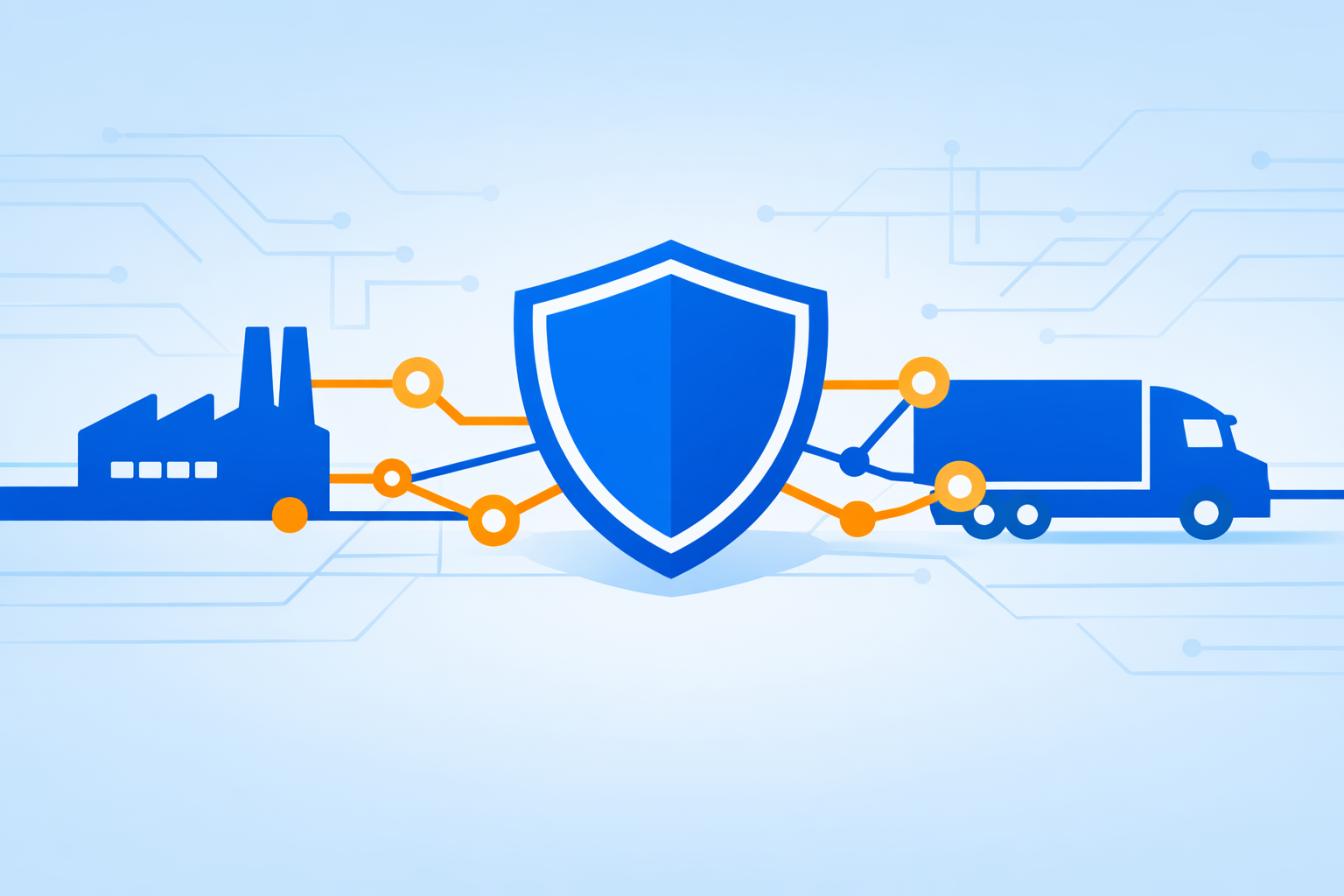
The EU's Network and Information Security Directive 2 (NIS2) is pushing automotive original equipment manufacturers (OEMs), Tier 1-3 suppliers, and logistics operators to implement structured operational technology (OT) security programs, replacing ad hoc practices with binding compliance roadmaps tied to enforceable financial penalties.
Background
NIS2 came into force in January 2023, marking a decisive shift in how digital risk is governed across critical sectors, including transport and automotive manufacturing. EU member states were required to transpose the directive into national law by October 17, 2024, imposing uniform risk management and reporting obligations on both "essential" and "important" entities.
Transposition progress has been uneven. The number of countries that had transposed the directive into national legislation rose from four to nine as of mid-February 2025, with substantial divergence in adoption timelines and requirements. Germany's NIS2 Implementation Act entered into force on December 6, 2025, and registration and reporting for German entities are carried out via the BSI portal, activated at the beginning of 2026.
Cyber threats continue to escalate. In Q2 2025, global cyberattacks rose approximately 21% year over year, with Europe recording the highest region-level increase. That threat trajectory directly underpins the regulatory push.
Details
NIS2 is particularly impactful for supply chains because it does not merely target OEMs-it places direct and indirect obligations on every level of the supply ecosystem, from Tier 1 to Tier 3 suppliers and beyond. Companies fall in scope if they meet the relevant sectoral definitions and exceed specific size thresholds, typically more than 50 employees and €10 million in turnover.
The directive's OT-specific demands center on three obligations. First, NIS2 mandates dynamic, system-wide risk assessment. Entities must maintain an up-to-date asset inventory spanning legacy and modern OT systems and continuously scan firmware and software for vulnerabilities. Unlike IT systems, OT environments consist of heterogeneous devices, real-time control loops, and proprietary protocols-many of which were not originally designed with cybersecurity in mind.
Second, incident reporting requirements are tiered and strictly time-bound. NIS2 requires an initial early warning to national authorities within 24 hours of a significant incident, a detailed follow-up report within 72 hours, and a final root-cause report within one month. Meeting this 24/72-hour reporting window is practically impossible using manual audits alone, as legacy OT systems were built for availability, not logging or alerting.
Third, vendor governance has become a contractual matter. NIS2 explicitly lists supply chain security among its 10 core cybersecurity risk management measures, requiring organizations to address vulnerabilities specific to each direct supplier and the overall quality of products and cybersecurity practices across the supply base. Contractual flow-downs must extend to in-scope suppliers, involving evaluation of whether current contracts meet NIS2 requirements or need updated terms-including clauses on incident reporting and audit rights.
For automotive suppliers specifically, the Trusted Information Security Assessment Exchange (TISAX) framework, developed by the European automotive association ENX, continues to gain momentum as more manufacturers adopt the standard. OEMs and key automotive suppliers with active TISAX certification at "Strictly Confidential" and "Very High Availability" labels are anticipated to be in broad alignment with NIS2's information security controls. However, the registration, incident management, and reporting requirements of NIS2 must still be met separately.
Penalties for non-compliance are structured by entity classification. Essential entities face fines of up to €10 million or 2% of global revenue; important entities face penalties of up to €7 million or 1.4% of global revenue. Management bodies are personally accountable for compliance, and governance failures may result in temporary bans or disqualification of individuals from leadership roles.
Notably, NIS2 applies regardless of whether an organization is directly attacked-if a supplier's security failure affects an essential entity's operations, both parties may face regulatory consequences.[1] Entities that submit reports late, cannot provide evidence, or lack supply chain oversight face heightened risk of audits and fines.
Outlook
As of 2025, several EU member states have published detailed NIS2 security requirements, and implementation is actively underway across critical sectors. Many local authorities are introducing sector-specific guidance to raise security maturity expectations. Supply chain security remains among the lesser-discussed aspects of the directive, yet the actions it could trigger-including renegotiation of supplier contracts, enhanced due diligence, and potentially replacing non-compliant suppliers-may prove one of the more exacting elements of any organization's NIS2 compliance journey. The European Commission has already launched infringement proceedings against member states that missed the transposition deadline, signaling that enforcement timelines will continue to tighten across the bloc.