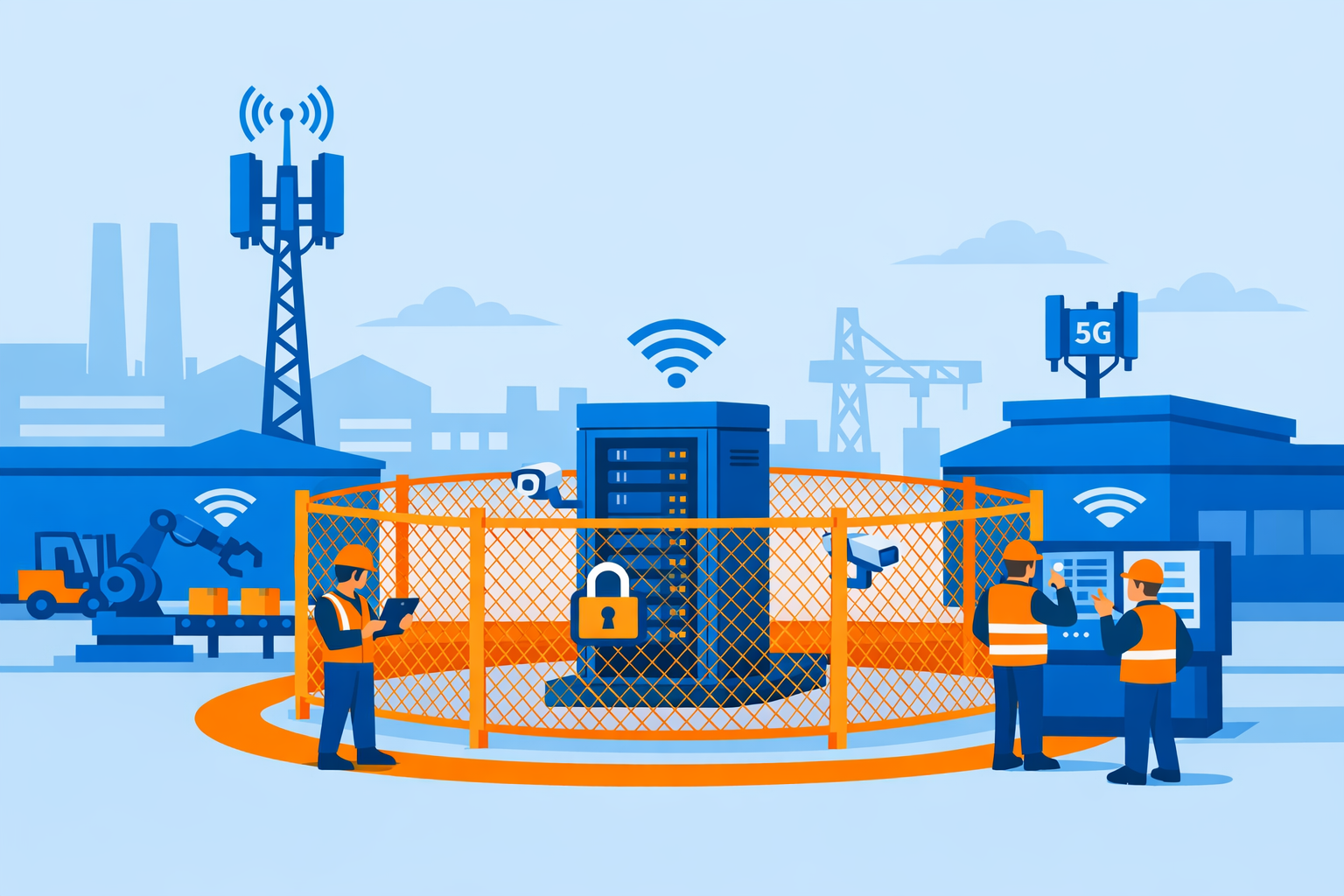
Europe's NIS2 Directive is reshaping operational technology (OT) security obligations across automotive and logistics supply chains, forcing Tier 1 through Tier 3 suppliers to overhaul risk governance frameworks - at the same time that a parallel shift toward open-standards industrial 5G networks is creating new compliance surface area for the same organizations.
Background
The EU's Network and Information Systems Directive 2 (NIS2, Directive (EU) 2022/2555) took effect in late 2024, establishing a new cybersecurity benchmark across Europe's critical sectors. The directive expands its scope to cover both IT systems and OT - a change that directly implicates plant-floor assets, programmable logic controllers (PLCs), and industrial control systems previously subject to minimal regulatory oversight.
EU Member States were required to transpose NIS2 into national law by October 17, 2024. Enforcement, however, has been uneven. As of June 30, 2025, only 14 Member States had fully transposed NIS2, while the European Commission continued infringement proceedings against 13 - including Germany, France, Spain, and Poland. On May 7, 2025, the Commission sent a reasoned opinion to 19 Member States for failing to notify full transposition, giving them two months to respond before potential referral to the Court of Justice of the EU.
Despite the legislative lag, the regulatory direction is firm. According to IDC's 2025 EMEA Security Technologies and Strategies Survey, nearly two-thirds of organizations directly covered by the legislation had not yet begun compliance work as of spring 2025, and 82% reported no change in their security budget to address NIS2 requirements.
OT Obligations Reach Deep into Supply Chains
What makes NIS2 particularly impactful is its emphasis on the supply chain: it does not merely target OEMs but places direct and indirect obligations on every level of the supply ecosystem - from Tier 1s to Tier 3s and beyond.[1] Notably, NIS2 applies regardless of whether an organization is directly attacked. If a supplier's security failure affects an essential entity's operations, both parties may face regulatory consequences.
Automotive and transport entities fall into the directive's highest scrutiny category. Under NIS2, essential entities - including large automotive manufacturers and transport operators - face fines of up to €10 million or 2% of global annual turnover, whichever is higher. Executives are personally liable: if an organization fails to implement proper cybersecurity measures, senior management can face fines, legal action, or temporary bans from management roles.
For OT environments specifically, manufacturers must implement continuous risk management processes tailored to OT realities. These include identifying vulnerabilities in both legacy and modern systems, maintaining a detailed inventory of devices and data flows, and deploying controls such as network segmentation and anomaly detection. Meeting NIS2's 24/72-hour incident reporting window is practically impossible through manual audits alone, as legacy OT systems were built for availability - not logging or alerting.[2]
ENISA has released updated resources mapping NIS2 obligations to global cybersecurity frameworks such as ISO/IEC 27001, NIST CSF, and IEC 62443, clarifying what practical implementation should look like in OT/ICS environments. For the automotive sector specifically, ISO/SAE 21434 is explicitly referenced as a complementary standard. NIS2 introduces stricter incident reporting rules requiring companies to inform relevant authorities within 24 hours of identifying an incident and provide detailed information within 72 hours.
The logistics sector faces parallel pressure. Air, rail, road, and maritime transport - including shipping companies and port operators - falls under the transport and logistics category of NIS2-regulated essential entities. For logistics and platform partners, NIS2 obligations are often passed through via contracts, tenders, security questionnaires, and incident reporting requirements.
Industrial 5G Adds a New Compliance Dimension
The concurrent rollout of open-standards private 5G networks across European automotive plants and logistics hubs is intensifying the compliance challenge. Private 5G networks now operate inside real manufacturing environments across Europe, with automotive plants, semiconductor facilities, machinery workshops, and advanced logistics hubs among the first to run production systems on private 5G rather than wired or Wi-Fi-only infrastructure.
Countries including Germany, the UK, and the Nordics are pioneering private 5G adoption within smart factories, automotive plants, and energy utilities, while the EU's focus on 5G corridors, cybersecurity, and open radio access networks (Open RAN) is accelerating enterprise deployments across public and private sectors. SNS Telecom & IT projects annual investments in private 5G networks for vertical industries will grow at a compound annual growth rate of approximately 41% between 2025 and 2028, surpassing $5 billion by end of 2028.
The security governance demands of these networks directly intersect with NIS2. Private 5G offers strong built-in protections, but security outcomes ultimately depend on governance - requiring factories to strengthen identity management, SIM and eSIM lifecycle handling, OT-IT segmentation policies, and anomaly detection. The EU toolbox for 5G security represents an important milestone, establishing a coordinated approach to securing 5G networks and calling for implementation of 5G standards across Europe.
Open RAN architectures - which disaggregate radio access network components across multi-vendor hardware and software stacks - expand the potential attack surface in OT environments. Suppliers adopting Open RAN-based private 5G must now contend with both the directive's supply chain security requirements and the increased vendor-management overhead inherent in open, multi-vendor deployments. The EU's 5G toolbox strategic measures include ensuring supplier diversity through appropriate multi-vendor strategies and fostering a diverse, sustainable 5G ecosystem within the EU.
Outlook
Despite transposition delays, NIS2 is moving inexorably toward enforcement across the EU and beyond, as international companies with operations in Member States or those supplying in-scope organizations are affected. According to IDC's survey, 41.1% of organizations that described themselves as out of scope for NIS2 reported receiving compliance requests from partners covered by the directive. For automotive and logistics suppliers operating multi-site European production networks, the convergence of NIS2 enforcement timelines and industrial 5G rollouts is compressing the window for OT security remediation. As enforcement timelines for NIS2, DORA, and the Cyber Resilience Act (CRA) unfold in parallel, the EU is forging a tightly interwoven cybersecurity regulatory framework spanning operational resilience, product security, and governance accountability.