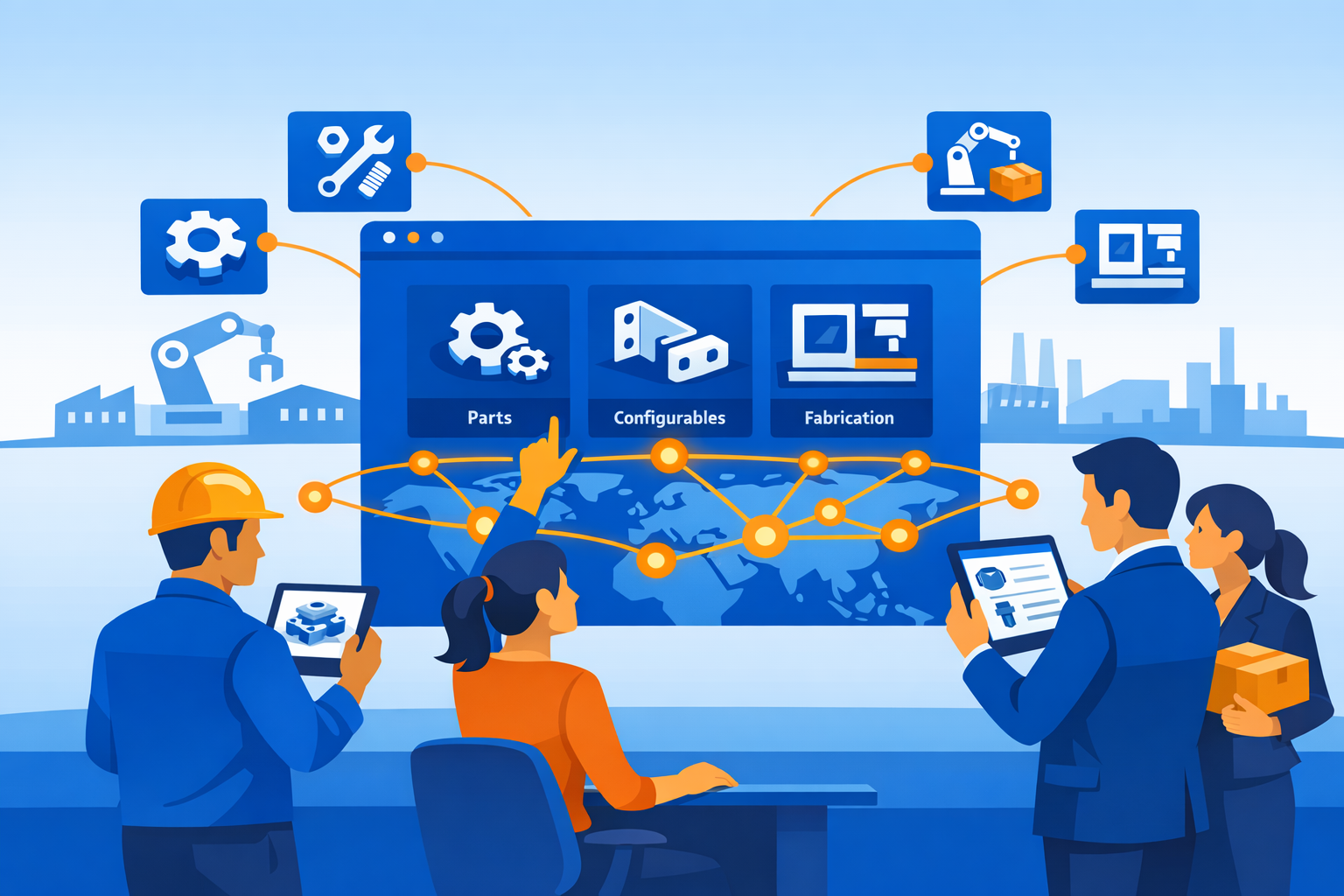
Capital expenditure on AI-enabled automation is recovering across manufacturing and logistics despite persistent macro headwinds. Structural labor shortages, supply-chain resilience imperatives, and converging edge infrastructure technologies are sustaining investment momentum. Earnings signals from industrial vendors and fresh market data point to a capex cycle broadening beyond hyperscaler data centers into the operational technology (OT) layer of factory floors and distribution networks.
Background
The renewed investment cycle follows years of suppressed automation budgets caused by pandemic-era uncertainty, rising interest rates, and volatile demand signals. For S&P 500 companies overall, CapEx is forecast to rise by 19% in 2025, followed by an additional 13% increase in 2026, largely driven by AI-related investments, according to LGT. Concurrently, non-AI industrial capex-long deferred by tariff uncertainty and geopolitical disruption-is showing early signs of recovery as reshoring activity intensifies. According to Morgan Stanley Research, nearly $3 trillion of AI-related infrastructure investment will flow through the global economy by 2028, with more than 80% of that spending still ahead.
Within manufacturing, the shift toward AI-readiness reflects a maturing investment thesis. A 2025 Deloitte survey of 600 manufacturing executives found that 80% plan to invest 20% or more of their improvement budgets in smart manufacturing initiatives, with a focus on automation hardware, data analytics, sensors, and cloud computing. Respondents characterized smart manufacturing as the primary driver of competitiveness over the next three years.
Investment Drivers: Labor, Resilience, and Agentic AI
Two structural forces-chronic labor shortages and the industrialization of agentic AI-underpin the 2026 capex rebound. A Deloitte and Manufacturing Institute report projects that up to 2 million U.S. manufacturing jobs could go unfilled by 2033 due to demographic shifts and persistent skilled labor shortages. A CADDi and SME "2026 Manufacturing Outlook Study" of more than 200 U.S. manufacturing professionals found that 69% of companies are investing in robots, equipment, and other hardware to fill the workforce gap-9% higher than in 2025.
In logistics, the deployment horizon has compressed. According to MarketsandMarkets, the global Logistics Automation Market is projected to grow from $35.14 billion in 2024 to $52.53 billion by 2029, at a compound annual growth rate of 8.4%. Gartner projects that by 2030, half of all cross-functional supply chain management solutions will use intelligent agents to automate decisions, compared with below 5% in 2025.
Agentic AI-software that takes autonomous action rather than merely surfacing data-is emerging as the critical differentiator in both domains. IDC forecasts that by 2026, over 40% of manufacturers with a production scheduling system in place will upgrade it with AI-driven capabilities to enable autonomous processes. In logistics, operators are deploying agentic platforms for real-time autonomous dispatch, predictive dock-workflow modeling, and exception management. Private equity activity reinforces the trend: in April 2026, STG acquired Carrier Logistics Inc. (CLI), pledging an "AI-first" R&D roadmap for its less-than-truckload and last-mile fleet management platform.
Edge AI, Private 5G, and OT Security Converge
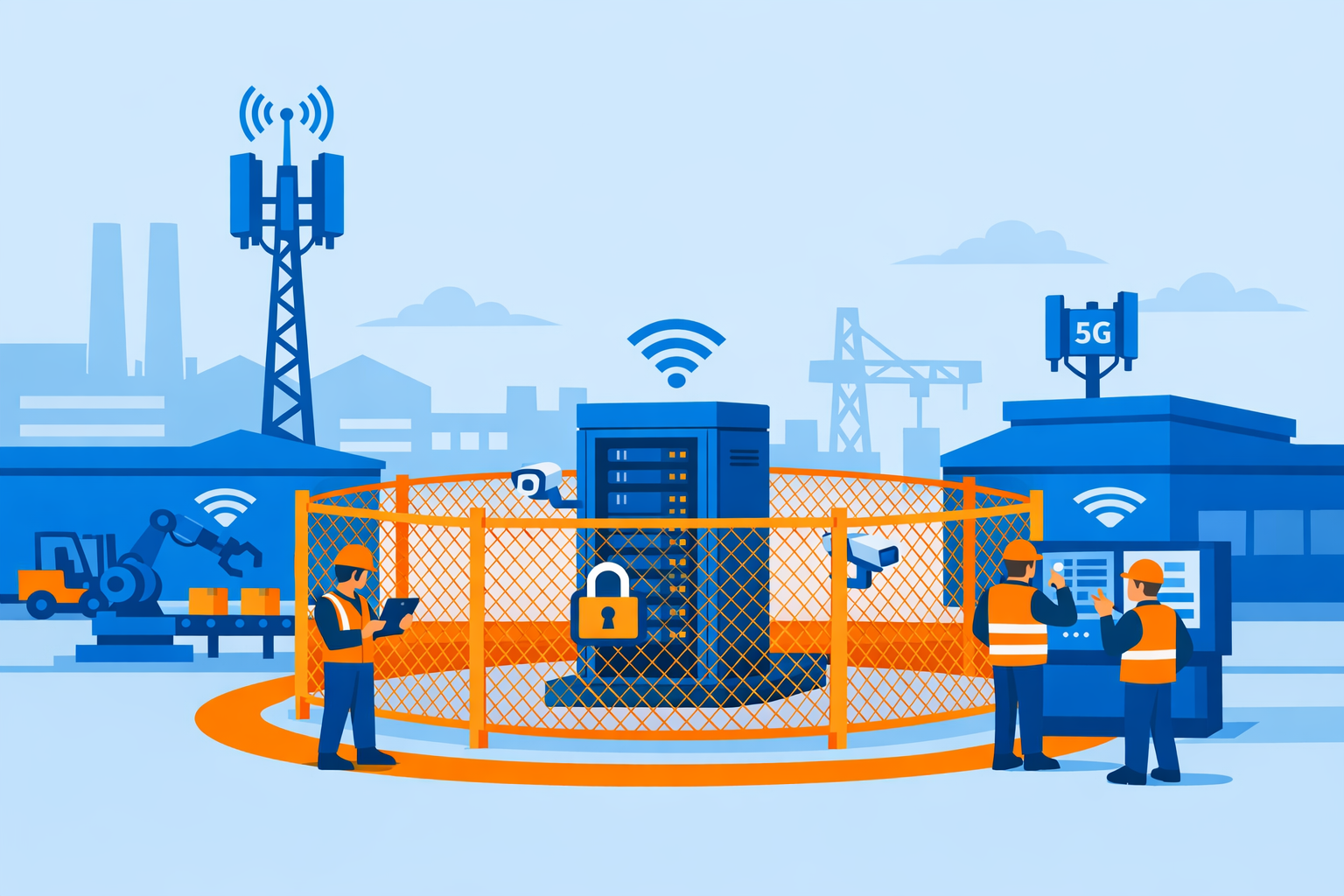
The infrastructure enabling factory-floor and warehouse AI is converging around three interdependent layers: edge computing, private 5G, and OT-native cybersecurity. As latency-sensitive use cases such as closed-loop process control and autonomous robotics proliferate, processing workloads closer to the point of data generation is becoming operationally essential.
Recent vendor moves illustrate the pace of convergence. At Mobile World Congress in March 2026, Siemens announced a verified cybersecurity solution for industrial private 5G networks in collaboration with Palo Alto Networks, combining Siemens' Private 5G infrastructure with Palo Alto Networks' Next-Generation Firewall (NGFW) optimized for AI and tested to IEC 62443 industrial automation security standards. Separately, Siemens announced at Hannover Messe 2026 the next generation of its Industrial Automation DataCenter-a pre-configured, AI-ready edge platform integrating accelerated compute from NVIDIA and cybersecurity from Palo Alto Networks, designed to separate IT networks from OT environments. Siemens is also expanding its private 5G infrastructure to the United States and seven additional countries, with U.S. availability targeted for summer 2026.
The security layer is attracting growing board-level attention. According to a Fortinet survey cited by Nozomi Networks, 52% of organizations assigned CISO or CSO responsibility for OT security in 2025, up from just 16% in 2022. A 2024 survey found that OT, IoT, and other specialized systems comprise 42% of enterprise assets and account for 64% of mid- to high-level enterprise risk. Regulations including NIS2 are also mandating defense-in-depth architectures aligned to IEC 62443.
Outlook
The broadening of AI-enabled capex from hyperscaler infrastructure into OT and logistics operations is expected to sustain vendor order pipelines through the second half of 2026, even as macroeconomic uncertainty moderates headline investment growth. Wall Street analysts, including those at Evercore and Bank of America, now estimate 2026 AI capital expenditures between $800 billion and $900 billion, with 2027 projections exceeding $1 trillion. For plant managers and operations executives, the near-term focus falls on closing the skills gap required to operate increasingly autonomous systems: the top concern for more than a third of respondents in Deloitte's survey of 600 manufacturing executives was equipping workers with the skills to maximize smart manufacturing and operations. Workforce training pipelines and OT security governance frameworks are therefore likely to feature alongside hardware procurement in 2026 modernization roadmaps.