Renault has announced plans to deploy 350 humanoid robots in its manufacturing plants by 2027 as part of its futuReady strategic plan, introduced in March 2026. The initiative aims to enhance operational efficiency, increase automation, and lower production costs across European facilities. Renault Group confirmed its objective to improve automation through next-generation robotics and implement 350 humanoid robots by 2027.
Background
The announcement followed Renault's launch of the futuReady strategy, targeting operational efficiency, heightened supply chain resilience, and cost reduction through 2030. Key goals include a 30% cut in production hours per vehicle, a 50% reduction in quality incidents within three years, and fully automated, AI-driven control of critical manufacturing processes. The plan also seeks to halve production downtime and improve traceability using digital twin technology and real-time data.
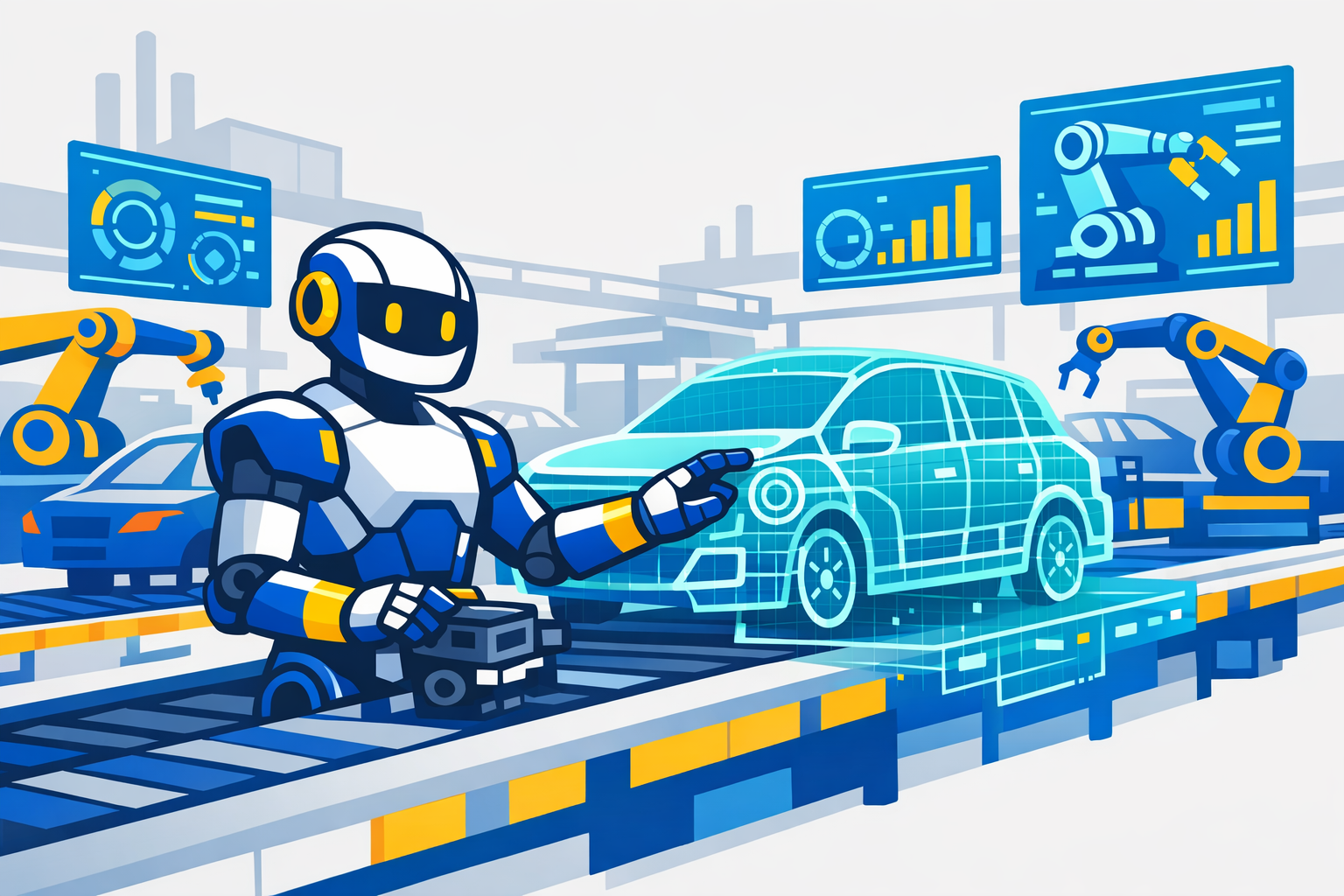
Renault has already fielded a humanoid prototype named Calvin on the Douai plant's supply line, where it transports tires for electric models such as the Scenic and Renault 5. According to industrial director Thierry Charvet, Calvin uses AI-enabled exoskeleton technology for environment awareness, autonomous navigation, and parts handling.
Details
Renault anticipates that humanoid robots will perform "arduous or low-value-added tasks," allowing human operators to focus on more complex work. The futuReady program projects automation gains from humanoid deployment to reduce per-vehicle production costs by 20% and shorten development cycles to two years, supported by industrial metaverse integration.
According to the company, the industrial metaverse-a digital twin platform-now generates five billion data points to enable predictive maintenance and strengthen operational resilience.
Calvin, developed by robotics company Wandercraft, was designed for scalability and cost efficiency in automotive settings. Renault's investment in Wandercraft signals a sustained commitment to humanoid automation.
Outlook
Renault plans to expand humanoid automation across its network by 2027, with increased integration of robotics, artificial intelligence, and digital twins. Anticipated impacts on workforce skills, safety procedures, and legacy systems are expected to prompt investments in training, infrastructure upgrades, and compliance standards. Should pilot deployments such as Calvin demonstrate reliability, related industries including electronics and logistics may adopt similar technologies within 18 to 24 months.